
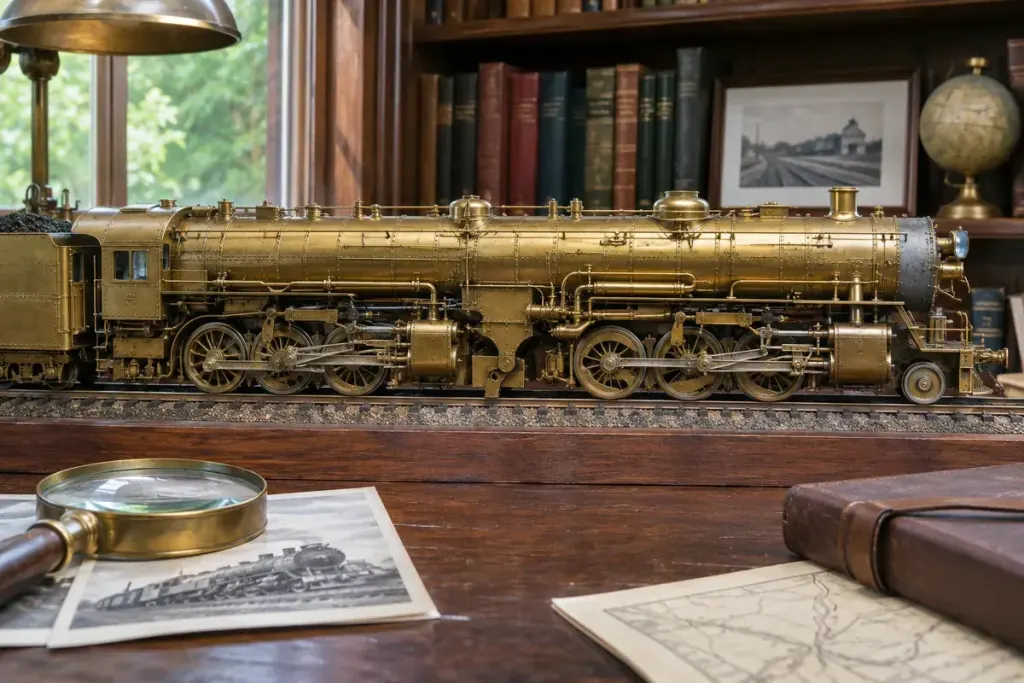
Two groups of driving wheels do not, by themselves, explain an articulated steam locomotive. With a Mallet, two ideas work together: part of the running gear can turn beneath the boiler, and steam is used in successive stages of expansion.
Anatole Mallet’s arrangement placed the rear engine on a rigid frame and allowed the front engine to articulate. High-pressure cylinders drove the rear group; their exhaust supplied larger low-pressure cylinders at the front. The Digital Mechanism and Gear Library’s biographical record describes this combination.
Read “articulated” and “compound” separately
Articulation concerns how parts of the locomotive move relative to one another around curves. Compounding concerns how steam passes through the engine. They are related in the Mallet design, but they are not synonyms. A locomotive can have articulated running gear without using the same compound steam arrangement.
That distinction helps when a caption uses “Mallet” loosely. Before repeating the label, look for a technical description of the actual class. A wheel arrangement alone does not establish how steam was distributed through its cylinders.
A model can introduce the questions
The Moffat Road Railroad Museum’s Mallet display description identifies an HO-scale model representing a particular locomotive configuration. It is an example of how a model and its accompanying documentation can support a discussion of engineering history.
When studying a model or drawing, locate the two wheel groups and then ask which group is associated with the moving frame. Next, look for the cylinder arrangement. Record anything hidden by the view rather than supplying details from memory.
For a Montana railway project, connect those general observations to a documented local locomotive class before making a local-history claim. Builder records, a reliable class diagram, and dated photographs can establish what a particular railroad operated.
The useful result is a description with two clear parts: how the locomotive bends around a curve, and how its steam does work. Keeping both in view makes the name “Mallet” more informative than a label for any unusually long steam engine.