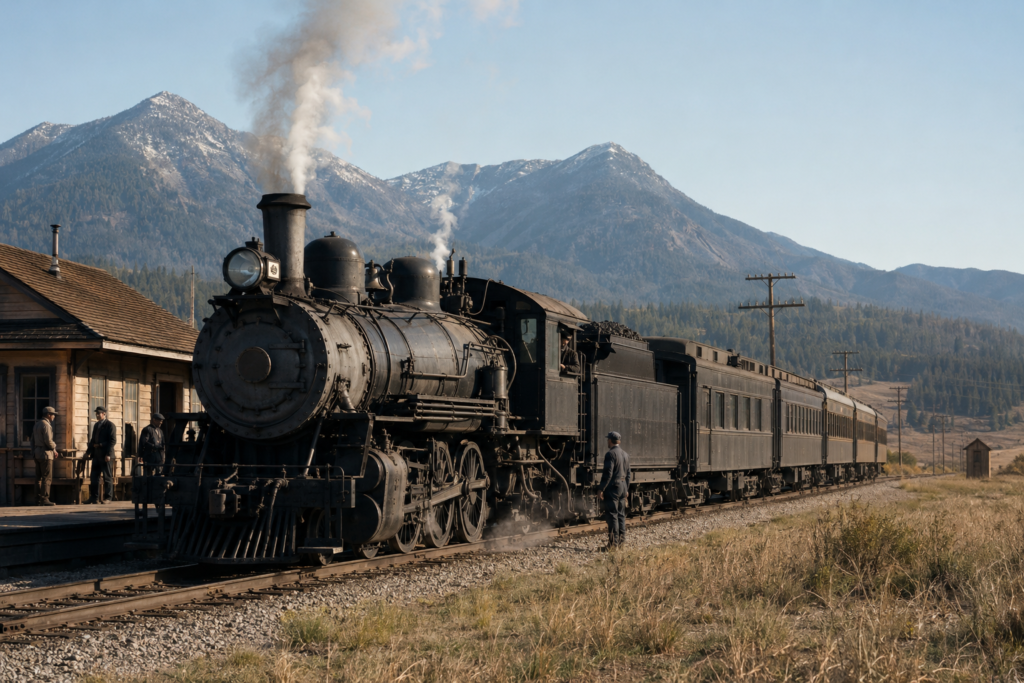
A Glimpse into the History of Classic Steam Trains Operating in the Early 20th Century reveals an era when railways stood at the center of industrial progress, human mobility, and economic expansion. With smoke rising above their funnels and steel wheels pounding against the rails, steam locomotives transformed distant settlements into connected communities.
At the beginning of the 1900s, these powerful machines transported passengers, agricultural products, minerals, mail, and manufactured goods across vast distances. They were more than transportation equipment. Steam trains became symbols of modernity, ambition, and the growing influence of industrial technology.
The Rise of Steam Railways Before the 20th Century
Steam-powered rail transportation emerged during the early decades of the 19th century. Engineers had already experimented with stationary steam engines, but placing that technology on wheels created an entirely new form of mobility.
Early locomotives were relatively small, mechanically simple, and sometimes unreliable. Even so, they demonstrated that heavy loads could be pulled more efficiently on iron rails than along ordinary roads.
As railway networks expanded, locomotive builders improved boiler pressure, wheel arrangements, braking systems, and passenger comfort. By the closing years of the 1800s, trains were faster, stronger, and capable of operating across increasingly difficult landscapes.
This foundation allowed the history of steam railways to enter one of its most influential periods during the early 20th century.
Steam Locomotives at the Dawn of a New Century
In 1900, steam locomotives were already essential to the economies of Europe and North America. Railroads had become the principal means of long-distance land transportation, especially in regions where highways remained primitive or nonexistent.
The typical locomotive burned coal, although wood and oil were also used in certain regions. Heat from the firebox boiled water inside the boiler, producing pressurized steam. That steam entered cylinders and pushed pistons connected to the driving wheels.
This system required constant attention. Engineers monitored speed, pressure, and track conditions, while firemen maintained the fire and controlled the supply of fuel. Their work demanded physical strength, mechanical knowledge, and close cooperation.
The sight of a classic steam locomotive approaching a station was an impressive spectacle. Passengers heard the whistle before the engine appeared through a cloud of smoke, steam, and cinders.
How Steam Engines Became Larger and More Powerful
Industrial growth created a demand for locomotives capable of pulling heavier trains. Railway companies answered by developing engines with larger boilers, stronger frames, and more driving wheels.
Wheel arrangements were commonly identified by counting the leading, driving, and trailing wheels. Designs such as the 4-4-0 American, 4-6-0 Ten-Wheeler, 2-8-0 Consolidation, and 2-8-2 Mikado became familiar sights on early 20th-century railways.
Passenger Locomotives Built for Speed
Passenger locomotives needed speed, balance, and dependable operation. Their large driving wheels helped them maintain higher speeds while pulling coaches between major towns and cities.
The 4-6-2 Pacific type became especially important for passenger service. Its combination of stability and boiler capacity made it suitable for express trains carrying travelers, mail, and baggage over long routes.
Railway companies often gave their leading passenger engines polished metalwork and carefully maintained paint. These locomotives represented the public image of the railroad and were expected to appear impressive when entering important stations.
Freight Engines Designed for Strength
Freight locomotives performed a different task. Instead of reaching the highest possible speed, they needed enough pulling power to move long strings of loaded cars.
Engines with smaller driving wheels and additional powered axles could generate greater traction. They hauled coal, lumber, grain, livestock, ore, and industrial machinery across regional and transcontinental routes.
The development of increasingly powerful freight engines reflected the economic role of rail transportation in the past. Factories, mines, farms, ports, and markets all depended on predictable railway service.
Life Aboard an Early 20th-Century Passenger Train
Passenger travel by steam train could be both elegant and uncomfortable. The experience depended heavily on the railway, the type of service, and the price of the ticket.
Prestigious express trains offered upholstered seats, sleeping compartments, dining cars, observation areas, and attentive onboard staff. Wealthier travelers could cross long distances while enjoying meals served on china and sleeping in enclosed berths.
Ordinary coaches were less luxurious. They could be crowded, noisy, and affected by soot entering through open windows. In winter, heating systems were not always consistent, while summer journeys could become hot and dusty.
Despite these limitations, trains offered a major improvement over wagon travel. They reduced journey times and made scheduled long-distance transportation available to a much wider population.
Stations also became places of anticipation and emotion. Families gathered on platforms to welcome relatives, soldiers departed for military service, and migrants arrived with luggage containing nearly everything they owned.
The Human Labor Behind Every Steam Train
A steam locomotive could not operate through machinery alone. Every successful journey depended on a large workforce both aboard the train and along the route.
The engineer controlled the locomotive, responded to signals, and adjusted speed according to track conditions. The fireman shoveled coal into the firebox, maintained steam pressure, and watched the boiler’s water level.
Conductors managed the train, communicated with crew members, and handled operational documents. Brakemen originally moved between cars to apply manual brakes, although air-brake systems later made the process safer and more coordinated.
Behind the scenes, mechanics inspected engines inside roundhouses and maintenance shops. Track workers repaired rails, cleared snow, and protected routes from landslides, floods, and other hazards.
This human dimension remains one of the most compelling parts of early railroad history. Steam travel was built upon discipline, experience, and dangerous physical labor.
Railways and the Growth of Towns
The arrival of a railway could transform an isolated settlement almost overnight. Stations attracted hotels, restaurants, warehouses, workshops, and new residential districts.
Farmers gained access to distant markets, allowing them to sell grain and livestock beyond their immediate region. Merchants received manufactured products more quickly, while newspapers and mail circulated with greater regularity.
Some towns were deliberately established beside railway tracks. Others declined when companies selected different routes or relocated maintenance facilities. A few communities became major railway centers because they contained junctions, locomotive shops, or division headquarters.
Across the American West, railroads influenced settlement patterns and commercial development. The heritage of historic rail routes can still be seen in communities whose streets, industrial districts, and surviving depots follow former railway corridors.
Steam Trains and the Expansion of the American West
During the early 20th century, steam railways remained essential to the development of western North America. Long-distance lines crossed open plains, river valleys, forests, and mountain passes.
Building these routes required bridges, tunnels, cuts, embankments, and carefully calculated gradients. Mountain railroading presented particular difficulties because steep climbs demanded more locomotive power.
Railway companies sometimes added helper engines to the rear or middle of heavy trains. These locomotives provided additional power during the ascent and were removed after the train crossed the summit.
Winter created another challenge. Snowdrifts could cover tracks, block mountain passes, and isolate communities. Railroads used wedge plows, rotary snowplows, and large maintenance crews to reopen important routes.
In places such as Montana, steam railways connected mining areas, ranching communities, timber districts, and growing cities. Their tracks became industrial lifelines across a landscape defined by enormous distances.
Famous Passenger Services and Railway Identity
Railway companies understood that passenger trains could serve as moving advertisements. They named their premier services, created distinctive color schemes, and promoted scenic routes through posters and brochures.
Long-distance trains offered a sense of adventure. Passengers watched landscapes change from urban districts to farmland, open prairie, mountain ranges, and river valleys.
Dining cars became symbols of sophisticated railway travel. Kitchens prepared full meals while the train moved, and dining staff served passengers despite vibration, curves, and sudden braking.
Observation cars allowed travelers to enjoy wide views from comfortable seats. On routes crossing scenic western landscapes, the journey itself became part of the destination.
These services helped establish the cultural appeal of vintage railway travel, an experience remembered for its combination of mechanical power, social interaction, and changing scenery.
The Sound and Atmosphere of the Steam Era
Few forms of transportation created an atmosphere as distinctive as the steam locomotive. Each engine produced a combination of mechanical rhythm, exhaust, whistles, bells, and escaping steam.
The familiar chuffing sound came from exhaust steam released through the smokestack. Its rhythm accelerated as the locomotive gained speed and became slower and heavier when the engine climbed a grade.
Whistles served practical purposes. Different patterns warned people at crossings, communicated with railway employees, and announced movement near stations or yards.
Steam also shaped the appearance of railway environments. Engine terminals were often filled with smoke, ash, water towers, coal structures, and locomotives waiting beneath large roundhouse roofs.
The work was dirty and demanding. Coal smoke darkened buildings, cinders covered equipment, and crews frequently finished their shifts coated in soot and grease. Yet this industrial texture contributed to the enduring image of the steam age.
Safety, Accidents, and Technological Improvements
Early railway operation involved considerable risk. Collisions, derailments, boiler failures, broken rails, and human error could produce serious accidents.
Railroads gradually introduced systems designed to improve safety. Standardized signals helped control train movements, while telegraph communication allowed dispatchers to coordinate traffic across long routes.
The widespread adoption of automatic air brakes made it possible to slow every car in a train from the locomotive. Automatic couplers also reduced the need for workers to stand between moving cars.
Track construction improved as companies replaced lighter rails with stronger steel. Bridges were reinforced, operating rules became more systematic, and inspection procedures grew increasingly detailed.
These changes did not eliminate danger, but they made railway transportation more dependable. They also demonstrated how technological progress was shaped by practical experience and lessons learned from earlier failures.
The Gradual Decline of Steam Power
Steam locomotives remained dominant through the opening decades of the 20th century, but their limitations became increasingly clear.
They required large quantities of fuel and water. Preparing a locomotive for service could take hours, and maintenance involved frequent cleaning, lubrication, boiler inspection, and repair.
Diesel-electric locomotives offered major operational advantages. They could start more quickly, travel longer distances without water stops, and operate in multiple-unit combinations controlled by a single crew.
Railway companies began adopting diesel power in growing numbers during the 1930s and 1940s. After World War II, the transition accelerated rapidly.
By the 1950s, steam locomotives were disappearing from many mainline services. Some continued working on secondary routes, industrial railways, and remote operations, but the age of regular steam transportation was coming to an end.
Preserving Classic Steam Locomotives Today
Many steam engines were scrapped after retirement, but a significant number survived in museums, city parks, railway stations, and preservation centers.
Some have been restored to operating condition. Heritage railways use them to recreate the sounds, movement, and atmosphere of historical train travel.
Preservation requires considerable expertise. Boilers must meet modern safety standards, mechanical components need specialized repairs, and replacement parts often have to be manufactured individually.
Even a stationary locomotive remains an important historical artifact. Its wheels, controls, firebox, and weathered surfaces reveal how engineers transformed heat and water into controlled mechanical power.
The survival of steam-era railroad heritage allows modern audiences to encounter transportation history as something tangible rather than purely theoretical.
Why the Steam Railway Era Still Matters
The classic steam trains of the early 20th century reshaped economies, landscapes, and everyday life. They carried raw materials to factories, finished goods to markets, and millions of passengers toward new opportunities.
Their influence extended beyond transportation. Railway schedules encouraged standardized timekeeping, stations redirected urban development, and steel tracks connected communities that had once been separated by days of difficult travel.
Steam locomotives also reflected the contradictions of industrial progress. They offered speed and opportunity, yet depended on strenuous labor and consumed enormous amounts of fuel.
Today, their whistles are heard mainly on preserved railways and special excursions. Nevertheless, the legacy of steam remains visible in historic depots, abandoned grades, railway bridges, museum collections, and communities built beside the tracks.
To study these machines is to understand a defining chapter in modern history—an age when clouds of steam above the horizon announced that people, goods, and new ideas were approaching.


