How the Telegraph System Revolutionized Railroad Operations in Montana
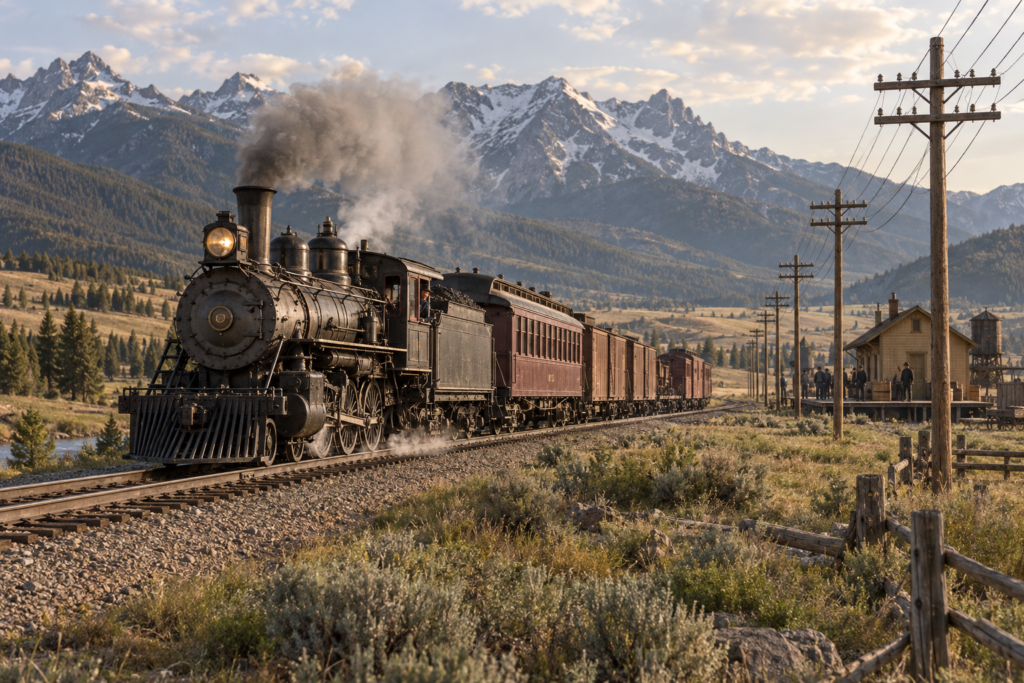
Montana railroad history was shaped not only by powerful locomotives and rugged tracks, but also by the invisible network of wires that connected isolated settlements. Montana’s vast distances, rugged mountain ranges, severe winters, and isolated settlements created enormous challenges for early railroad operators. Before dependable electronic communication became available, train crews often relied on printed schedules, handwritten instructions, signal flags, and information delivered from one station to another. The arrival of the telegraph transformed this uncertain environment into a coordinated transportation network.
Communication Before the Telegraph
Operating a railroad safely required accurate information about train movements, track conditions, weather, and station activity. Yet early crews had no practical way to communicate instantly across long distances.
A train leaving one station might travel for hours without receiving updated information. If another locomotive experienced mechanical trouble, livestock wandered onto the track, or flooding damaged a bridge, approaching crews might remain unaware of the danger.
Railroad employees depended heavily on fixed timetables. Every conductor and engineer needed to know where opposing or faster trains were expected to be. Even a minor delay could disrupt the schedule and increase the risk of two trains entering the same section of track.
These challenges were especially serious in Montana, where settlements were widely separated and the surrounding terrain could slow both trains and messengers.
Telegraph Lines Followed the Railroad
Railroads and telegraph networks developed a close relationship. Telegraph wires were frequently installed beside the tracks, where railroad workers could inspect and repair them more easily. Stations along the route became communication points connecting remote communities with regional operating offices.
This combination of steel rails and wires became a defining feature of Montana railway history. The railroad transported passengers, livestock, minerals, timber, and supplies, while the telegraph carried the information needed to keep those movements organized.
A telegraph operator stationed in a small Montana community could receive instructions from a dispatcher located many miles away. Messages that once required hours or days to deliver could arrive within minutes.
This speed fundamentally changed how railroads managed their daily operations.
Train Orders Created a More Flexible System
One of the telegraph’s most important railroad applications was the transmission of train orders. Dispatchers used these written instructions to control train movements, arrange meeting points, and adjust operations when schedules changed.
After receiving a message, the station operator carefully copied it onto an official form. The order was then delivered to the conductor and engineer. Accuracy was essential because a missing word, incorrect time, or misunderstood station name could have serious consequences.
The development of telegraph railroad operations allowed dispatchers to respond to actual conditions rather than relying entirely on a timetable prepared in advance.
If a freight train was delayed while climbing a steep grade, the dispatcher could instruct another train to wait at a siding. If a passenger service needed priority, slower trains could be held at designated stations until the main line was clear.
This flexibility helped railroads use single-track routes more efficiently.
Coordinating Trains on Single-Track Lines
Much of Montana’s early railroad infrastructure consisted of a single main track with passing sidings placed at intervals. Trains traveling in opposite directions could not simply continue until they met. Their movements had to be carefully planned.
Dispatchers used telegraph reports to follow each train’s progress from station to station. Operators notified the dispatcher when a train arrived, departed, or passed their location.
This early form of traffic control created a moving picture of activity across the railroad. Although it depended on people rather than computers, it provided a level of coordination that would have been impossible through timetables alone.
Improving Railroad Safety
The telegraph did not eliminate railroad accidents, but it gave employees a powerful tool for preventing them. Dispatchers could warn stations about disabled locomotives, track obstructions, washouts, fires, rockslides, and other hazards.
Montana’s environment made this capability particularly valuable. Heavy snow could block mountain routes, while spring runoff could damage track foundations or weaken wooden structures. Sudden storms sometimes reduced visibility and interfered with maintenance work.
Through historical railroad communication, warnings could move across the line faster than the trains themselves. Operators could hold traffic at safe locations until inspectors confirmed that the route was open.
Telegraph messages also helped organize emergency responses. Work crews, replacement locomotives, medical assistance, and specialized equipment could be dispatched from the nearest available point.
Establishing Standard Operating Procedures
Telegraphy encouraged railroads to develop formal communication rules. Messages followed recognized formats, train orders were repeated back for verification, and employees documented when instructions were received.
This discipline reduced ambiguity. Railroad communication could no longer depend solely on casual verbal instructions or assumptions about the timetable.
Operators learned specialized codes and procedures designed for speed without sacrificing accuracy. Their work became an essential part of early railway safety systems throughout Montana.
Supporting Freight and Passenger Services
Montana railroads carried commodities across considerable distances. Mining districts needed machinery and supplies, ranching communities shipped livestock, and agricultural areas depended on trains to move grain and other products toward larger markets.
The telegraph allowed station agents to report available freight, request railcars, confirm shipping arrangements, and notify destinations about incoming loads. Railroad managers could position locomotives and rolling stock according to current demand.
This made railroad freight coordination more efficient. Empty cars were less likely to remain unused in one location while customers waited for equipment elsewhere.
Passenger operations benefited as well. Stations could receive information about late trains, special services, connecting routes, and changes caused by weather or mechanical problems.
Although travelers did not enjoy the instant updates available today, telegraph communication gave station employees far more reliable information than they had possessed before.
Telegraph Operators Became Essential Railroad Employees
The station telegraph operator occupied a position of considerable responsibility. Operators needed to recognize Morse code transmitted at speed, accurately record messages, understand railroad terminology, and remain calm during emergencies.
In smaller Montana stations, one employee might perform several roles. The telegraph operator could also sell tickets, handle baggage, complete freight documents, update train registers, and assist passengers.
Their office often served as the information center of the local community. News, business messages, and personal telegrams arrived through the same network that carried railroad orders.
The daily experiences of these workers provide an important perspective on Montana railroad heritage. Railroad history was shaped not only by locomotives and construction crews, but also by the operators who kept information moving across the system.
A Demanding and Precise Profession
Telegraph work required intense concentration. Operators listened to patterns of electrical clicks and translated them into letters, numbers, and operational instructions.
Poor weather, damaged wires, electrical interference, or heavy message traffic could make the work more difficult. Nevertheless, the operator had to distinguish routine communication from urgent train orders and emergency warnings.
A mistake might delay several trains or place employees in danger. For this reason, railway telegraphers developed a professional culture centered on accuracy, repetition, and strict observance of operating rules.
Connecting Remote Montana Communities
The impact of railroad telegraphy extended beyond train movement. Many stations became some of the first dependable communication links available to remote settlements.
Residents and businesses could send messages without waiting for a letter to travel overland. Merchants communicated with suppliers, ranchers received market information, and families exchanged urgent personal news.
These connections supported economic growth around railroad corridors. A community with rail and telegraph access could communicate and trade more efficiently than an isolated settlement dependent on wagon roads and irregular mail service.
The spread of railway communication technology therefore influenced both transportation and community development. It shortened the practical distance between Montana towns and commercial centers elsewhere in the country.
From Telegraph Orders to Modern Dispatching
Railroad communication continued to evolve during the twentieth century. Telephone circuits, automatic signals, centralized traffic control, radio, and computerized dispatching gradually replaced many traditional telegraph functions.
However, these newer systems followed principles established during the telegraph era. Dispatchers still needed to know where trains were located, determine which movements had priority, communicate instructions, and respond quickly to unexpected conditions.
Modern railroad control centers can monitor large territories with digital displays and real-time information. Their technological capabilities are far beyond those of an early station office, but their purpose remains familiar.
The telegraph introduced the idea that information could manage movement across an entire transportation network.
The Lasting Legacy of the Railroad Telegraph
The telegraph revolutionized Montana’s railroads by making long-distance coordination fast, structured, and dependable. It allowed dispatchers to modify train movements, helped crews respond to hazards, improved the use of single-track lines, and connected remote stations with centralized management.
It also changed the communities surrounding the railroad. Telegraph offices carried commercial information, personal messages, and news into areas where communication had previously been slow and uncertain.
Understanding this system reveals why communication in railroad history deserves attention alongside famous locomotives, mountain passes, bridges, and depots. Trains provided the physical power that moved Montana, but the telegraph supplied the information that helped them move safely and efficiently.
Its wires may have disappeared from most railroad corridors, yet the operational philosophy they created continues to influence railway dispatching today.