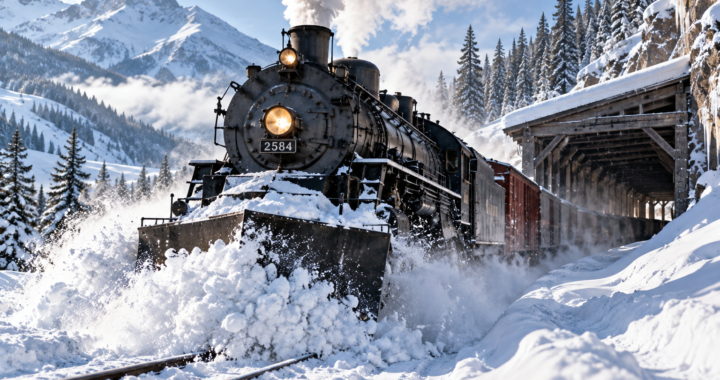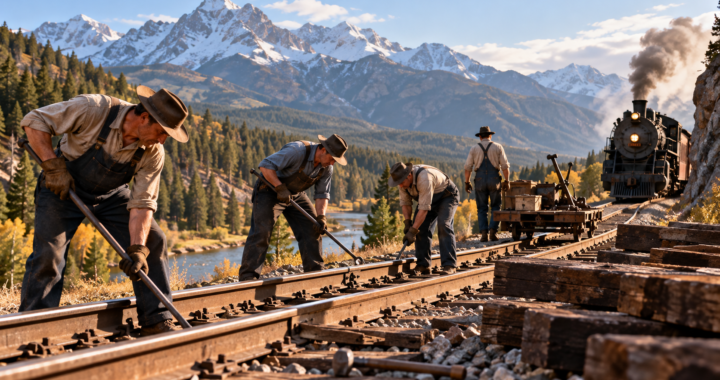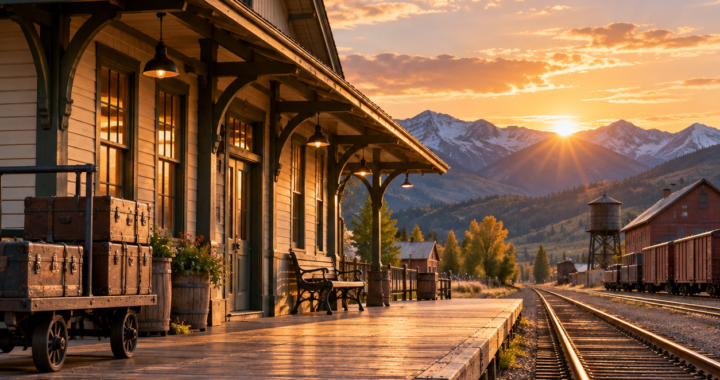
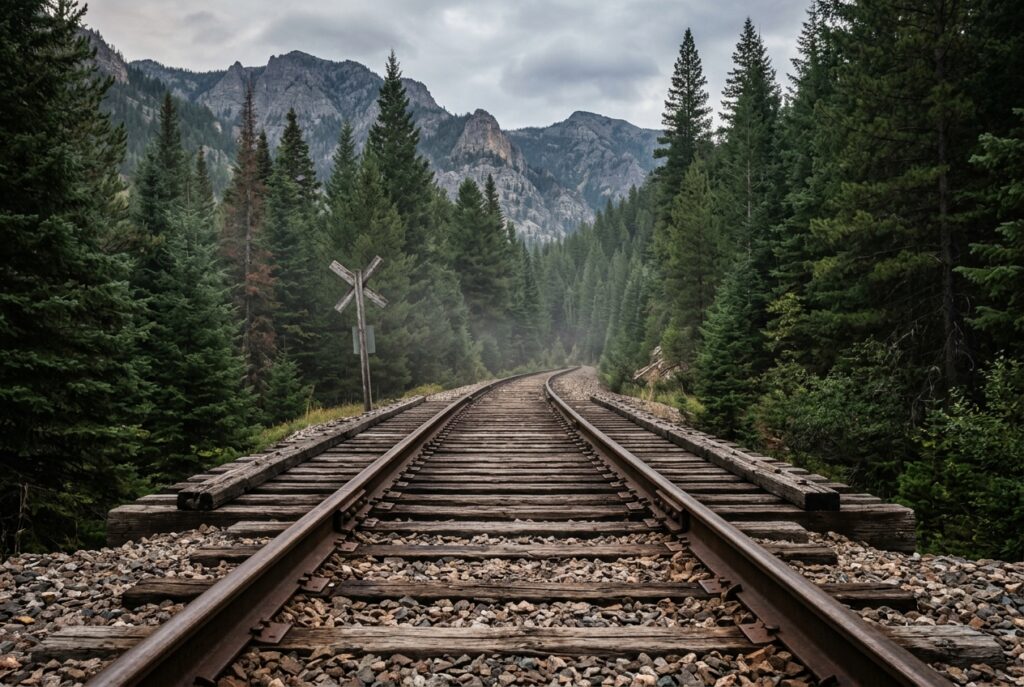
Montana’s old railroad tracks are more than remnants of a transportation network. Across the state’s wide valleys, mountain passes, abandoned sidings, and weathered depots, generations of railroad workers and travelers have left behind stories that blur the line between history and folklore.
Some tales speak of phantom trains appearing in the darkness. Others tell of lonely whistles, mysterious footsteps, and figures seen beside tracks that have not carried regular trains for decades.
These stories form part of the state’s historic railroad folklore, where real events, local memories, superstition, and imagination became intertwined.
How Montana’s Railroad Tracks Became a Landscape of Legends
The arrival of railroads transformed Montana during the late nineteenth and early twentieth centuries.
Rail lines connected isolated communities with distant markets, brought settlers into new territories, and supported mining, agriculture, timber, and trade.
Yet railroad life was also difficult and dangerous.
Workers spent long nights away from their families. Trains traveled through remote landscapes where snow, darkness, rockslides, and harsh weather could create serious hazards.
For those who lived and worked along the tracks, unusual sounds and unexplained events naturally became subjects of conversation.
Over time, ordinary incidents could become extraordinary stories.
A distant whistle might become the cry of a train that no longer existed. A lantern moving through the darkness could turn into the ghostly light of a forgotten brakeman.
This is where Montana railroad ghost stories began to take on a life of their own.
The Phantom Train of the Mountain Pass
Among the most enduring types of railway legends is the story of the phantom train.
According to versions of this folklore, people traveling near isolated mountain railroad corridors sometimes heard the unmistakable sound of a locomotive approaching.
First came the distant whistle.
Then came the rumble of wheels.
Some versions describe headlights appearing around a bend, illuminating the surrounding darkness.
But when the mysterious train seemed close enough to see clearly, it disappeared.
No locomotive was found.
No train appeared on the timetable.
Only the echo of the whistle remained.
Why Phantom Trains Became So Common
The idea of a ghost train was not unique to Montana.
Railroad communities across North America developed similar stories, especially around dangerous mountain routes and locations associated with accidents.
Railroads were symbols of movement and progress, but they also carried memories of people who never completed their journeys.
For communities living beside the tracks, a phantom train offered a powerful way to preserve those memories.
The legend did not necessarily need to be believed literally.
It could simply represent the feeling that the past never completely disappeared.
The Ghostly Lantern Along the Tracks
Another recurring story in Montana railroad folklore involves a solitary lantern moving beside abandoned or quiet tracks.
The figure carrying it is often described as a railroad worker searching through the darkness.
Sometimes the lantern appears in the distance before slowly approaching.
Other versions tell of a light crossing the tracks and vanishing among the trees.
The story has often been associated with the image of a missing brakeman or railroad employee who supposedly continued performing his final duty after death.
Whether such sightings came from actual apparitions, distant lights, wildlife, or tired eyes is impossible to establish.
But the image remains one of the most evocative symbols among Montana railway legends.
Whistles Heard When No Train Is Coming
Few sounds are more strongly connected with railroads than a locomotive whistle.
Even today, people who grew up around railroad towns often recognize the sound immediately.
In traditional stories, however, an unexplained whistle can become something much more mysterious.
Residents near historic railroad corridors sometimes told stories of hearing a train whistle late at night despite seeing no train.
The whistle might come from a mountain valley.
It might seem to echo from an abandoned siding.
Or it might sound close enough to suggest that a locomotive was about to emerge from the darkness.
The Memory Behind the Sound
There are practical explanations for mysterious railroad sounds.
Mountain landscapes can carry sound over surprisingly long distances. Wind, temperature changes, and natural echoes can make noises difficult to locate.
An ordinary train operating miles away could sound much closer than it really was.
Still, folklore is rarely concerned only with practical explanations.
For generations of railroad communities, an unexplained whistle became a reminder of trains that had once dominated the landscape.
Abandoned Depots and Stories Left Behind
Old depots occupy a special place in historic railroad folklore.
These buildings were once centers of activity.
Passengers waited for trains. Telegraph operators communicated with distant stations. Railroad employees handled freight, schedules, and equipment.
When a route declined, the sudden quiet could feel almost unnatural.
A building that had once been filled with voices might stand empty.
A platform that once welcomed hundreds of passengers could become overgrown.
It is easy to understand why such locations became associated with supernatural stories.
People walking near an abandoned depot might report hearing footsteps inside.
Others might describe a door moving without an obvious cause or seeing a shadow through a dusty window.
Whether these stories originated from physical sounds, local animals, visitors, or imagination, they became part of the cultural memory surrounding old railroad sites.
Railroad Workers in Montana’s Ghost Lore
Many Montana railroad ghost stories focus on workers rather than passengers.
This reflects the central role railroad employees played in the state’s development.
Engineers, firemen, brakemen, conductors, maintenance crews, telegraph operators, and track workers spent countless hours maintaining the system.
Their jobs demanded physical strength, concentration, and courage.
Some worked in freezing temperatures.
Others operated trains through remote mountain country in the middle of the night.
The Forgotten Railroad Man
One recurring folklore figure is the lone railroad worker who appears near the tracks after dark.
He may be described as wearing old-fashioned work clothes or carrying a lantern.
Sometimes he is said to gesture toward the rails before disappearing.
The story often carries an underlying warning.
The ghost is not simply frightening.
He represents the dangers faced by railroad workers and the human cost hidden behind the expansion of the railway network.
In that sense, the legend becomes a memorial disguised as a ghost story.
Train Wrecks and the Birth of Local Legends
Railroad accidents have historically played an important role in creating railway legends.
A serious wreck could remain part of a community’s memory for generations.
Even long after physical evidence disappeared, people continued telling stories about the location.
A bend in the tracks might acquire a reputation as a place where strange lights appeared.
A remote bridge could become associated with mysterious sounds.
An old siding might be remembered as a place where workers once gathered after a tragedy.
Such stories demonstrate how folklore preserves emotional history.
The exact details may change with every generation, but the central memory survives.
Why These Legends Still Fascinate Us
The appeal of Montana’s railroad legends comes from their connection to real landscapes.
These are not imaginary castles or distant mythical kingdoms.
The stories are attached to tracks, bridges, depots, tunnels, mountain passes, and small railroad communities.
That physical connection makes the legends feel unusually immediate.
A person standing beside an old rail line can imagine the steam locomotive that once passed there.
They can picture workers walking along the ballast after sunset.
They can imagine a passenger staring through a dark window while the train disappeared into the mountains.
The landscape itself becomes part of the story.
Preserving Montana’s Railroad Folklore
Railroad history is often remembered through locomotives, photographs, timetables, engineering records, and historic buildings.
But folklore deserves attention too.
Stories passed between railroad workers, families, and local communities reveal how people experienced the railway emotionally.
They show that railroads were not simply machines and infrastructure.
They were places of excitement, danger, opportunity, loneliness, tragedy, and adventure.
Exploring Montana railroad history through these stories can therefore provide a different perspective on the state’s transportation past.
The legends surrounding old tracks may not always be historically verifiable, but they remain valuable cultural artifacts.
The Tracks May Be Quiet, But the Stories Remain
Montana’s railroad landscape has changed dramatically since the era when steam locomotives dominated the rails.
Some routes have disappeared.
Some depots have fallen silent.
Some tracks have been removed entirely.
Yet the stories remain.
A phantom locomotive heard beyond a mountain ridge, a lantern moving beside an abandoned line, or a whistle echoing through the darkness can become more than a frightening tale.
It can serve as a reminder of the people who built, operated, traveled on, and sometimes lost their lives along Montana’s railroads.
That is what makes railway legends so enduring.
They transform forgotten places into storytellers.
And when the night grows quiet around Montana’s old railroad tracks, it is easy to imagine that the past may not be completely silent after all.