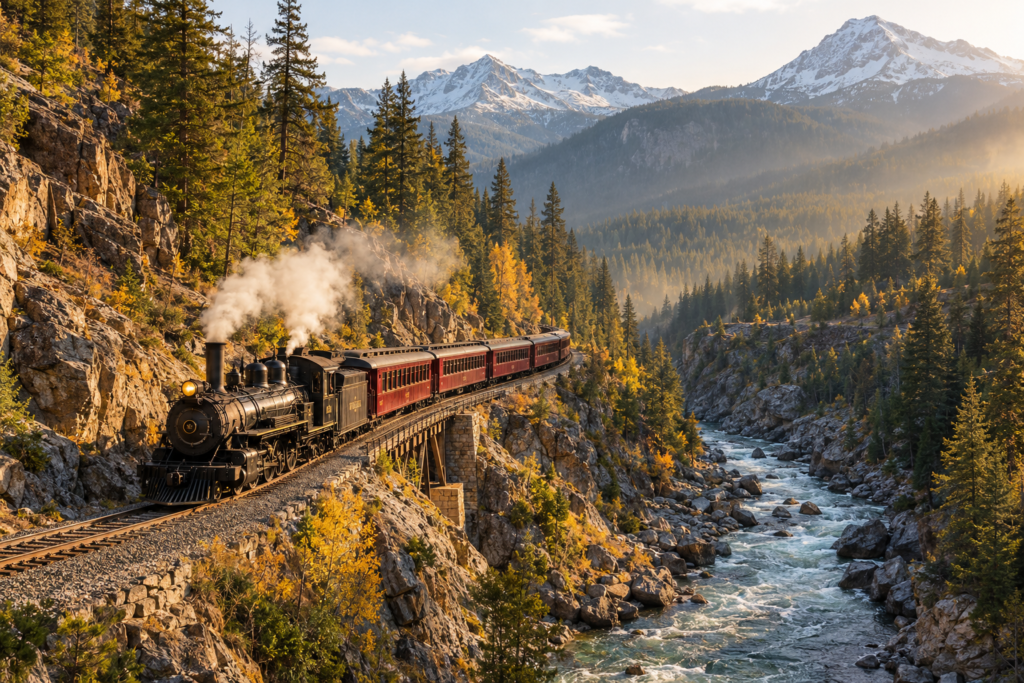
Across the United States, historic locomotives still carry passengers through mountain passes, river canyons, forests, and former mining country. These rides offer more than beautiful scenery. They preserve the atmosphere of an era when railroads connected remote communities and transformed the American landscape.
From narrow-gauge steam trains in the Rocky Mountains to vintage railcars traveling through Appalachian valleys, the best scenic historical train rides combine living history with unforgettable views. Each journey reveals how geography, engineering, and human ambition shaped the nation’s railway heritage.
Why Heritage Railways Remain So Captivating
A heritage railway turns transportation history into a physical experience. Passengers can hear the exhaust of a steam locomotive, feel the movement of an old coach, and watch landscapes unfold at the measured pace of traditional rail travel.
Many preserved lines once served miners, loggers, ranchers, or isolated towns. Today, they introduce new generations to the machinery and working culture of the railroad age.
Unlike modern high-speed transportation, these trains encourage passengers to observe every curve, bridge, and mountain slope. This slower rhythm is one reason America’s preserved railway heritage continues to attract families, photographers, rail enthusiasts, and history travelers.
Durango & Silverton Narrow Gauge Railroad, Colorado
The Durango & Silverton Narrow Gauge Railroad delivers one of the most dramatic historic train journeys in the American West. Its route follows a former Denver and Rio Grande Railway line through the rugged San Juan Mountains.
The train departs from Durango and travels toward the historic mining town of Silverton. Along the way, passengers see rocky cliffs, deep ravines, evergreen forests, and the rushing Animas River.
A Railway Built for Mining Country
The narrow-gauge line was constructed during Colorado’s mining era. Its compact track design allowed trains to negotiate sharp curves and difficult mountain terrain more economically than standard-gauge railways.
Steam locomotives remain central to the experience. Their sound echoes against the canyon walls as the train climbs through remote country that is difficult to reach by road.
Open-air cars offer exceptional views during warmer months, while enclosed coaches recreate a more traditional passenger experience. Seasonal conditions and operating schedules can affect the available route, so travelers should confirm details before visiting.
Cumbres & Toltec Scenic Railroad, Colorado and New Mexico
Crossing the state line between Colorado and New Mexico, the Cumbres & Toltec Scenic Railroad preserves a spectacular section of narrow-gauge mountain railway.
Its trains travel through high meadows, forests, steep canyons, and open desert-like terrain. The changing landscape makes the journey feel like a moving survey of the American Southwest.
Steam Power at High Elevation
The route climbs toward Cumbres Pass, where elevation, weather, and steep grades challenge both machinery and crew. Authentic steam locomotives work hard on the ascent, often producing powerful exhaust as they pull passenger cars uphill.
Highlights may include sweeping curves, wooden trestles, rugged rock formations, and distant mountain views. Much of the route passes through undeveloped territory, allowing passengers to imagine what railway travel felt like before highways crossed the region.
This combination of original infrastructure and natural scenery makes it a defining example of historic American rail travel.
Grand Canyon Railway, Arizona
The Grand Canyon Railway connects Williams, Arizona, with the South Rim of the Grand Canyon. It combines a historic rail atmosphere with access to one of the country’s most recognizable natural landmarks.
The journey begins among the pine forests around Williams. As the train moves north, the scenery gradually opens into high desert, grassland, and broad views beneath the Arizona sky.
Arriving at the Canyon by Train
Traveling by rail offers a sense of anticipation that highway travel rarely creates. The Grand Canyon remains hidden for much of the journey, making the final arrival near the South Rim especially memorable.
Vintage-inspired coaches, restored rail equipment, and onboard entertainment contribute to the heritage experience. Depending on the service and season, passengers may encounter different classes of accommodation and special event trains.
The railway also illustrates how trains helped establish early tourism around major American landscapes. Long before private cars became dominant, railways made distant natural attractions accessible to visitors from across the country.
Cass Scenic Railroad, West Virginia
Cass Scenic Railroad State Park preserves the industrial character of Appalachian logging railroads. Rather than crossing open western mountains, its trains climb through the dense forests of West Virginia.
The railway is particularly famous for its geared steam locomotives. These powerful machines were designed for slow, demanding work on steep and uneven logging tracks.
A Working Landscape Brought Back to Life
The journey begins in the historic company town of Cass, where preserved buildings recall the community that grew around the timber industry. From there, the train climbs into the mountains using switchbacks and steep grades.
Passengers experience the heavy rhythm of a locomotive working close to its limits. Smoke drifts between the trees, metal components move visibly, and the engine’s mechanical effort becomes part of the attraction.
Cass is not simply a scenic excursion. It is an immersive introduction to industrial labor, logging history, and the role of railways in extracting resources from difficult terrain.
Nevada Northern Railway, Nevada
The Nevada Northern Railway offers a remarkably authentic encounter with western railroad history. Based in Ely, Nevada, the preserved railway grew from the region’s copper industry.
Its historic complex includes tracks, locomotives, maintenance facilities, and railroad buildings that retain the appearance of a working industrial system.
Riding Through Nevada’s Open Country
Excursion trains travel across a landscape of dry valleys, sagebrush, distant mountains, and wide skies. The scenery feels spacious and isolated, reflecting the environmental challenges faced by early railway builders.
The locomotives and rolling stock provide insight into the practical side of railroading. This was a transportation network designed to move ore, equipment, workers, and supplies rather than merely entertain tourists.
For travelers interested in railroad engineering and industrial history, the Nevada Northern offers a strong connection between preserved machinery and its original economic purpose.
Strasburg Rail Road, Pennsylvania
The Strasburg Rail Road presents a gentler but equally evocative heritage journey through the farmland of Lancaster County, Pennsylvania.
Steam locomotives pull traditional passenger coaches past cultivated fields, barns, farmhouses, and quiet rural roads. The short journey captures the visual charm of nineteenth- and early twentieth-century countryside travel.
An Accessible Introduction to Steam Railroading
Strasburg is especially appealing to families and first-time heritage railway passengers. The ride is manageable, the scenery is peaceful, and the historic equipment creates an immediate sense of stepping into another era.
The railway’s agricultural surroundings distinguish it from mountain-based excursions. Instead of dramatic cliffs and canyons, passengers see a productive landscape shaped by generations of farming.
It demonstrates that US railway tourism can be compelling without extreme terrain. Sometimes the most memorable scenes are simple ones: a steam train moving past a cornfield, a whistle sounding near a crossing, or smoke drifting above a red barn.
Mount Washington Cog Railway, New Hampshire
The Mount Washington Cog Railway climbs the slopes of Mount Washington in New Hampshire’s White Mountains. Its unusual rack-and-pinion system allows trains to overcome grades that conventional locomotives could not safely manage.
The ascent reveals forests, rocky alpine terrain, and expansive mountain panoramas. Weather conditions can change rapidly, adding an unpredictable character to the experience.
Historic Technology on a Remarkable Climb
A cog railway uses a toothed rail positioned between the running rails. A gear beneath the locomotive engages with this rack, giving the train the traction needed for an exceptionally steep climb.
The engineering is visible and easy to appreciate during the journey. Passengers can sense the grade beneath them as the train steadily gains elevation.
This railway is an important reminder that the history of rail transportation includes highly specialized systems. Engineers frequently adapted railway technology to overcome geographical obstacles that once appeared impossible.
White Pass & Yukon Route, Alaska
The White Pass & Yukon Route begins in Skagway, Alaska, and climbs into the mountains along a route associated with the Klondike Gold Rush.
The railway passes waterfalls, steep valleys, trestles, rocky slopes, and sweeping views of glacially shaped terrain. Few heritage rail experiences combine such intense scenery with such a dramatic historical setting.
Following the Trail of the Gold Rush
The line was created to provide a more reliable transportation route through difficult mountain country. Its construction required workers to confront cliffs, harsh weather, and severe logistical challenges.
Today, passengers can admire the engineering while looking down into valleys once crossed by prospectors seeking fortune in the north. Vintage-style coaches and narrow-gauge tracks strengthen the sense of historical continuity.
Among all scenic historical train rides in the United States, this journey stands out for its combination of frontier history and immense northern landscapes.
Verde Canyon Railroad, Arizona
The Verde Canyon Railroad travels through a remote canyon landscape in central Arizona. The route follows the Verde River and passes red rock formations, high cliffs, desert vegetation, and historic structures.
Although the passenger experience is designed for modern comfort, the railway corridor itself reflects Arizona’s mining and transportation history.
Desert Views from the Rails
Open-air viewing cars allow passengers to feel the canyon breeze and observe details that would be missed from a highway. Eagles, native plants, rock walls, and traces of earlier settlement may appear along the route.
The contrast between the dark train, red stone, green river corridor, and broad blue sky creates excellent photographic opportunities. It is an appealing choice for travelers who want historical atmosphere without sacrificing comfort.
The ride also demonstrates how heritage railway landscapes can reveal the close relationship between industrial development and the natural environment.
Choosing the Right Historical Train Journey
The ideal railway depends on the experience a traveler wants. Colorado and New Mexico offer classic steam locomotives surrounded by high mountain scenery. Alaska provides dramatic frontier landscapes, while Arizona combines desert geology with railway history.
West Virginia is ideal for visitors interested in logging and geared locomotives. Pennsylvania offers relaxed countryside scenery, and Nevada delivers a strong industrial atmosphere.
Travelers should also consider elevation, trip duration, coach style, accessibility, and seasonal weather. Some excursions operate primarily during warmer months, while others offer limited winter services or special holiday trains.
Advance reservations are often helpful, particularly during autumn foliage periods, summer vacations, and popular seasonal events.
How to Make the Most of the Ride
Arriving early provides time to explore station buildings, view locomotives, and observe crews preparing the train. Historic stations often contain artifacts, photographs, or interpretive displays that give the journey additional context.
A seat near an open-air platform can be excellent for photography, but enclosed coaches may be more comfortable in cold, windy, or smoky conditions. Layered clothing is useful on mountain routes because temperatures can change considerably during the trip.
Passengers should also spend time listening. The whistle, exhaust, wheels, brakes, and track joints form the authentic soundtrack of America’s living railroad history.
Why These Historic Railways Deserve Support
Operating a heritage railway requires skilled employees, dedicated volunteers, specialized maintenance, and constant attention to safety. Steam locomotives are complex machines, while historic tracks, bridges, and coaches demand careful preservation.
Every ticket supports more than a scenic outing. It helps maintain equipment, preserve railway skills, and keep important transportation stories accessible to the public.
These lines allow passengers to experience history through motion, sound, landscape, and machinery. They transform preserved objects into living systems and show why historic train journeys across America remain meaningful in the modern age.
A journey aboard one of these trains is therefore more than a nostalgic escape. It is a chance to see the United States from the rails, where mountains rise slowly, rivers follow the track, and the past feels close enough to hear in every whistle.