
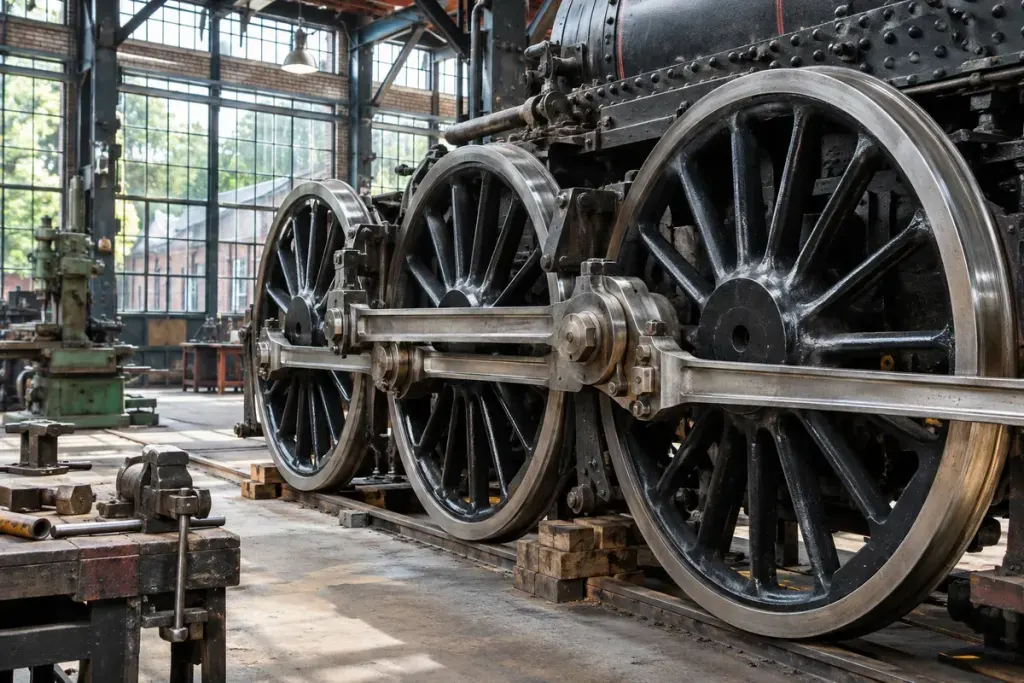
Two groups of driving wheels do not always mean that a steam locomotive bends between them. In a duplex design, separate groups can be driven by separate cylinder sets while sharing a rigid main frame. That distinction matters when reading a side view.
The T1 Trust’s description of the Pennsylvania Railroad T1 cylinder arrangement identifies its duplex layout as two cylinder sets on a rigid frame. The organisation is building a new example of the type; its project information provides a direct view of the components involved.
Follow the power path
Start with a clear historical photograph or engineering drawing. Locate the cylinders, then follow the connecting rods to the wheels they drive. Identify where one coupled group ends and the next begins. Do not count every visible wheel as a driving wheel; leading and trailing wheels have other roles.
Next, look for evidence about the frame. A wheel arrangement written with several groups can describe the layout, but the notation alone may not tell a beginner how the structure moves. A sectional drawing or a reliable technical description helps settle that question.
This is a useful comparison with an articulated locomotive, where part of the powered running gear can pivot relative to the boiler or main structure. Similar-looking groups can therefore represent different mechanical solutions.
Keep the historical claim precise
When adding a photograph to a railway-history notebook, record the locomotive class, number if known, date and source. Label an identification as tentative if the image is incomplete. Streamlining can hide details that would be obvious on an exposed chassis.
A project page or enthusiast account may celebrate a design’s ambitions. Separate those ambitions from measured operating results, and avoid assuming that a distinctive arrangement was universally successful simply because it was technically interesting.
For a museum visit, one good question is: “Which wheels belong to each engine group, and which parts are fixed together?” It turns a row of wheels into a readable mechanism and makes the difference between duplex and articulated construction much easier to remember.