
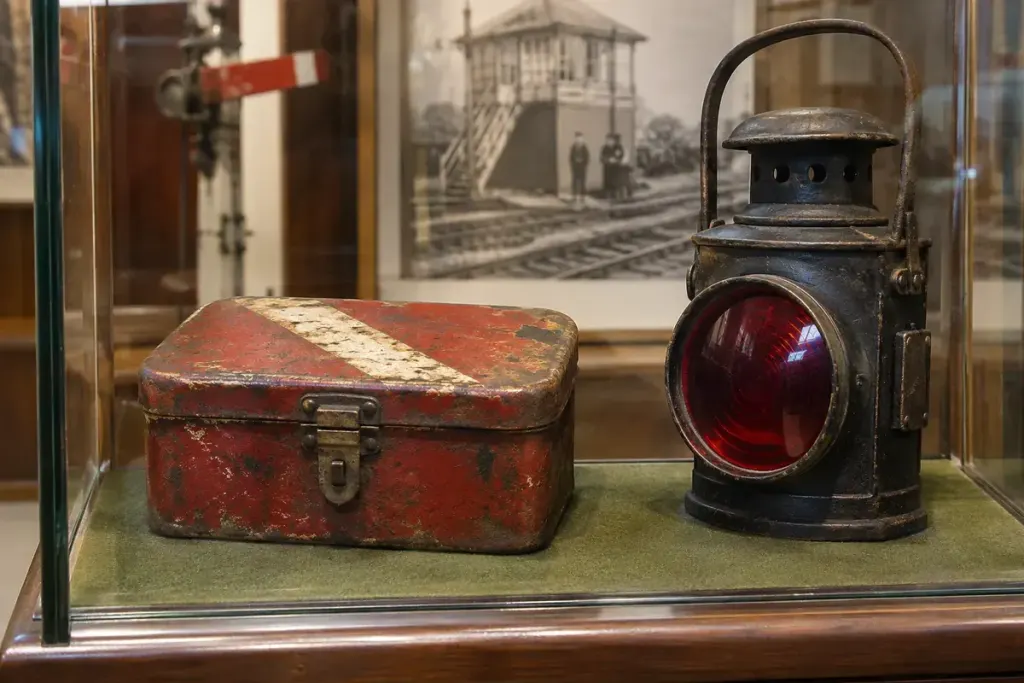
A small metal tin in a railway collection may seem less impressive than a signal box or locomotive. Its purpose can nevertheless reveal how railway staff communicated a warning when visibility or circumstances made a visual signal insufficient.
Railway detonators, also called torpedoes in some railway traditions, produced an audible warning when passed over by a train. The Science Museum Group preserves related objects, including a Great North of Scotland Railway detonator box. Its collection also distinguishes boxes, tins, spent examples and other associated objects.
Read the container as evidence of work
Start with the catalogue’s object type. A storage tin is not the warning device itself. Look for a maker, railway name, accession description and any recorded date range. A company’s name can help establish context, but it does not automatically give the year that a particular object was manufactured or used.
Ask how the object fits into the wider signalling system of its railway and period. Audible warnings supported operating procedures; they were not a universal replacement for every signal. The meaning and use of equipment depended on the applicable rule book and staff training.
A useful museum note separates what the label states from what the shape suggests. For example, “catalogued as a detonator box” is evidence. “Carried by this particular employee on this route” requires provenance that a generic box may not have.
Historical does not mean harmless
Do not open, strike, test or collect an unknown device found near railway land. Age and corrosion cannot establish that an item is inert. Keep away and notify the appropriate railway or emergency authority from a safe position if a suspected hazardous object is encountered.
For research, use collection photographs and documented records rather than handling an unidentified item. Compare the container with the museum’s description, then look for a dated operating manual in an archive.
The small object’s value is the question it opens: how did people make a warning unmistakable in a noisy, moving railway environment? A careful record can answer part of that question without turning a historical exhibit into an experiment.