
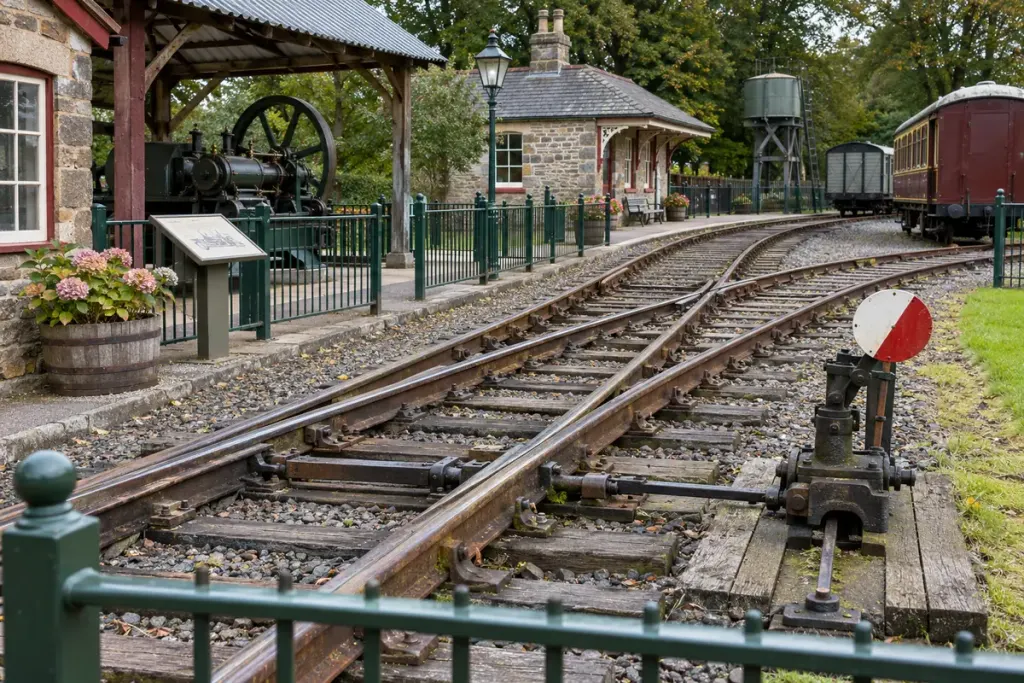
A short set of points that seems to lead away from the running rail can look like an unfinished route in an old railway photograph. In some cases, its purpose was to stop a wrong-direction movement from continuing down a gradient.
The RSSB railway terminology glossary describes catch points as designed to derail vehicles running back on a gradient in the wrong direction. The historical problem is therefore specific: a vehicle moving where it should not, rather than a normal train choosing between two destinations.
Read the slope and the intended movement together
When studying a plan, locate the gradient information and the normal direction of traffic before interpreting the points. A cropped image of rails alone may omit the context that explains the installation.
Keep catch points distinct from a siding’s trap arrangement or a separate derailer. These terms are related to protecting railway movements, but their names should not be exchanged simply because each can deliberately take a vehicle off its expected path.
RSSB’s signalling material distinguishes protecting other lines from escaping vehicles and preventing vehicles from running back. These documents are cited for terminology, not as instructions for operating a railway.
A useful museum question
Ask which movement the exhibit was intended to intercept. Then ask what evidence supports that explanation: a dated track plan, operating instructions, a photograph or an account of the route’s working.
In your notes, separate the surviving object from its former arrangement. A piece displayed on level ground may once have belonged on a gradient. A restored demonstration may also omit equipment that formed part of the original installation.
Study track only from authorised visitor areas and never test or move equipment. The interest is in reconstructing the railway’s safety problem from records and interpretation. Once that problem is clear, a seemingly odd piece of pointwork becomes evidence of how railway designers dealt with gravity, direction and the consequences of an uncontrolled movement.