
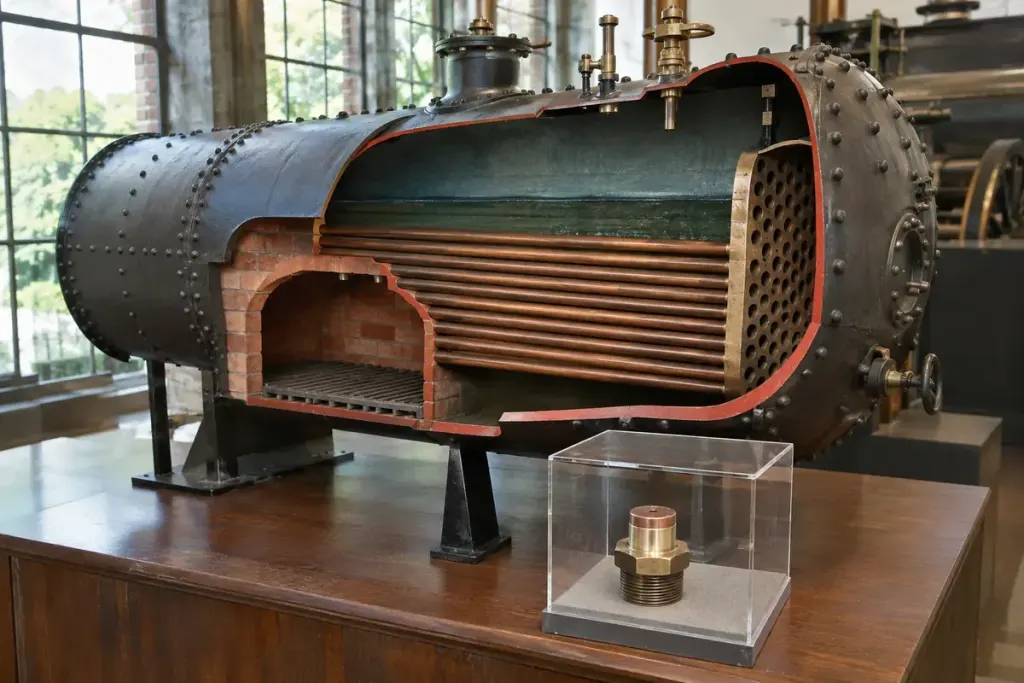
Among the large wheels and heavy rods of a steam locomotive, a small boiler fitting can be easy to overlook. A fusible plug is one such object: its significance comes from the material inside it and the dangerous condition it was intended to signal.
The Science Museum Group’s description of an 1862 plug explains a threaded metal body with a passage filled by a metal that melts at a predetermined temperature. If the water level became too low and the fitting overheated, the fusible material could melt and allow steam into the firebox, warning the crew.
This was an additional protective appliance, not a promise that a boiler could safely run without sufficient water. Boiler safety depended on the whole system, its condition and the people operating it. A historical fitting should not be interpreted as a substitute for proper operation or inspection.
Three useful questions at a collection
- Does the catalogue identify the object as a locomotive fitting, or as a plug from another type of steam boiler?
- Is its date the manufacture date, donation date or an estimate?
- Is the displayed object complete, sectioned, or altered to show how it worked?
These distinctions keep a visit grounded in the particular object. A plug from an industrial boiler can explain the principle, but it does not establish which fitting a named Montana locomotive used. That requires records for the locomotive or its class.
When photographing a museum label, capture the accession number as well as the description. You can then compare the catalogue with drawings or maintenance records later. The small component becomes a route into the history of operational risk, rather than merely another brass-coloured part in a display. This is a historical explanation, not a guide to maintaining or operating a live boiler.