
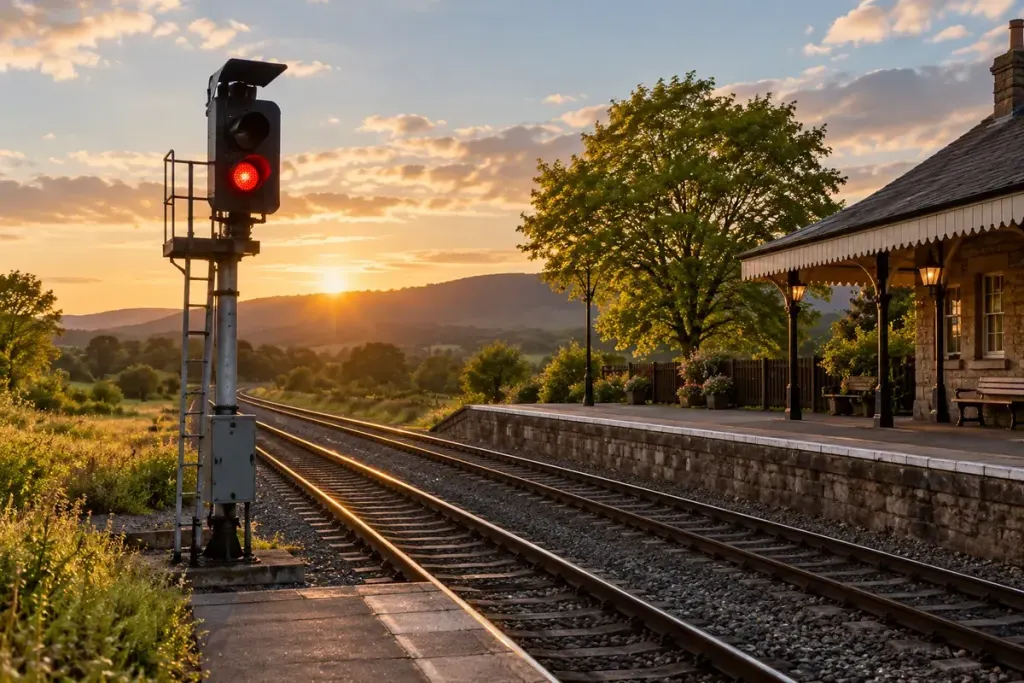
A signal beside a railway line can look as though it is simply telling one driver to stop or go. Behind the visible indication is a larger question: what stretch of railway is available for the next movement, and how is that information established?
Network Rail’s description of signalling systems explains the use of track blocks to separate trains and distinguishes systems using different technologies. A block is a useful starting idea, but it is not a complete operating rule for every railway or period.
Look for the section behind the signal
When studying a historic map or station photograph, ask where the relevant section begins and ends. A single photograph may show the signal without showing the next signal, junction or control point. Its apparent isolation can therefore be misleading.
Find the date and the railway’s signalling context. The way a system establishes occupancy, authorises movement and handles exceptional working can change over time. Avoid applying a rule remembered from one modern railway to an older railway in another country.
Use the track plan as a second source
At a museum, compare the signal exhibit with a track diagram or an explanation of the signal box. Note whether the display describes an actual location, a reconstructed arrangement or a demonstration. Those are different kinds of evidence.
A useful notebook entry might identify the signal, its location and date, the system named by the museum, and one unanswered question about the section it controlled. This is more informative than writing only “red means stop” beneath a photograph.
Do not infer permission to enter railway property from a signal indication or from a line appearing unused. Historical interpretation is an observation task carried out from authorised places. Thinking in sections helps explain why signals, train detection, communications and operating rules developed together, while leaving the actual operation to trained railway staff.