
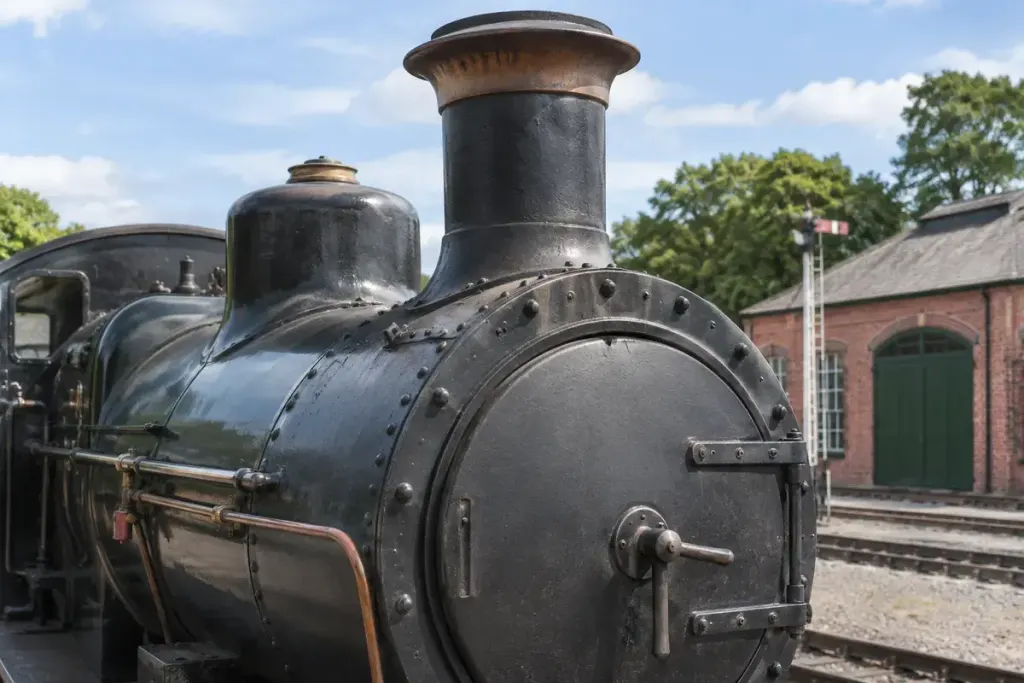
A steam locomotive’s chimney carried more than a dramatic plume. Hot particles escaping with the exhaust could threaten nearby vegetation and property. Spark-arresting arrangements were attempts to reduce that hazard while allowing the locomotive to work.
For a railway-history reader, the interesting question is not simply whether a chimney looks unusual, but what equipment was fitted at a particular date and what problem its designers were addressing.
Look for documentary evidence
The National Railway Museum’s report on Locomotion describes trials of spark arresters following a serious lineside fire in 1832 and discusses evidence for chimney fittings. It is a documented British example, not evidence that a particular Montana locomotive used the same arrangement.
The museum’s Doncaster drawing lists also show how specific components can be traced through technical records. A catalogue entry is a lead to a drawing; it does not reveal every detail of the mechanism on its own.
Separate appearance from function
A historic photograph may show an external stack shape while hiding internal equipment. Conversely, a preserved engine may carry fittings from a later restoration. Identify the engine, date and operating context before connecting a visible feature to a technical explanation.
For an illustrative archive search, place three items together: a dated photograph, a component drawing and a maintenance or modification record. If their dates do not align, record the mismatch rather than silently combining them into one configuration.
Bring the question back to the local railway
When studying a Montana railway, ask which fuel was used, what routes crossed fire-prone landscapes and which company records survive. Those questions can guide a local investigation without assuming that all steam locomotives solved the problem identically.
A spark arrestor was a risk-reduction component, not proof that an engine could never start a fire. The most persuasive historical account connects the device to evidence of its installation, maintenance and operating environment.