
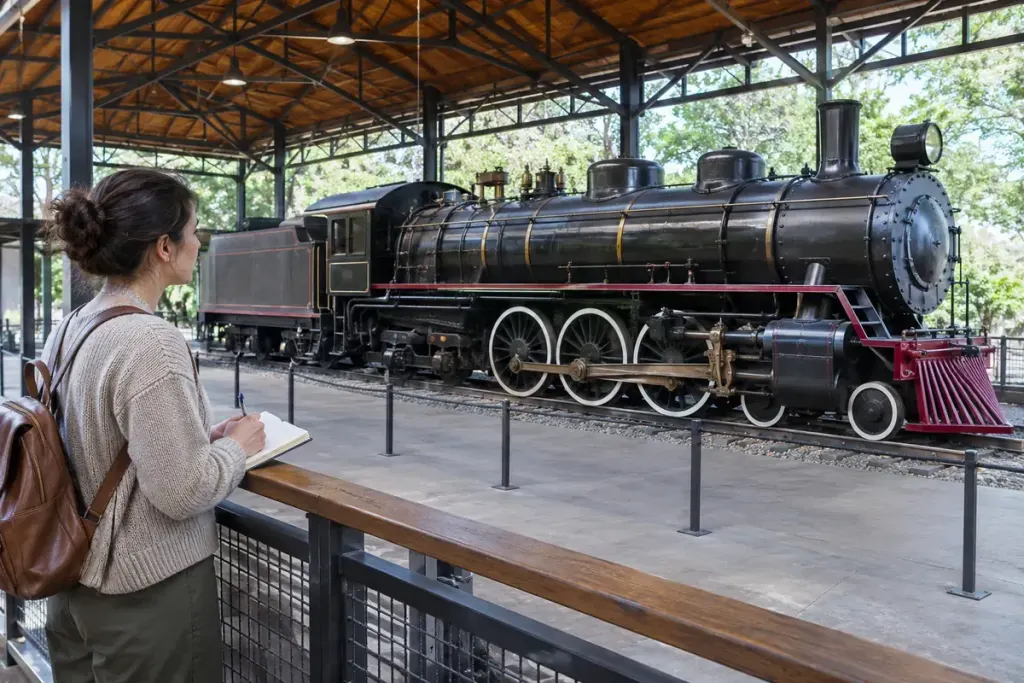
A preserved steam locomotive may carry a compact vertical machine beside the boiler. It is easy to assume that every cylinder-shaped part helped turn the driving wheels. An air pump performed another job: using steam power to produce compressed air.
The Science Museum Group’s Westinghouse type F compressor record identifies a steam-driven air compressor. Equipment of this kind belongs in the story of locomotive auxiliary systems, including the compressed-air supply used for air brakes, rather than being another set of wheel-driving cylinders.
Separate the power source from the output
In a museum notebook, give the component two labels: what drives it and what it supplies. This small distinction prevents a common confusion. A steam-powered device can produce something other than the mechanical motion sent to the locomotive’s wheels.
Do not assume that a pump on one locomotive has the same layout as the example in another collection. Look for the maker’s plate, catalogue entry or locomotive documentation. Preserved equipment may also have been altered during its working or museum life.
Use the pipes as questions, not invitations to touch
From the public viewing area, note which connections are visible and which disappear behind other equipment. Ask a guide where the compressed air was stored and how the pump fitted into the braking arrangement. Leave operational explanations and demonstrations to the qualified staff.
A practical sketch uses separate colours for the component outline and the routes you cannot yet identify. A dotted line can represent a question. Drawing an uncertain route as a solid connection makes it look more established than your observation allows.
Keep the collection’s object number beside the sketch. That makes it easier to find the technical record later, especially when several similar-looking pumps appear in the same display.
A locomotive becomes more understandable when its smaller machines are given their own jobs. The air pump is a good reminder that producing steam was only the beginning of a network of different functions aboard the engine.