
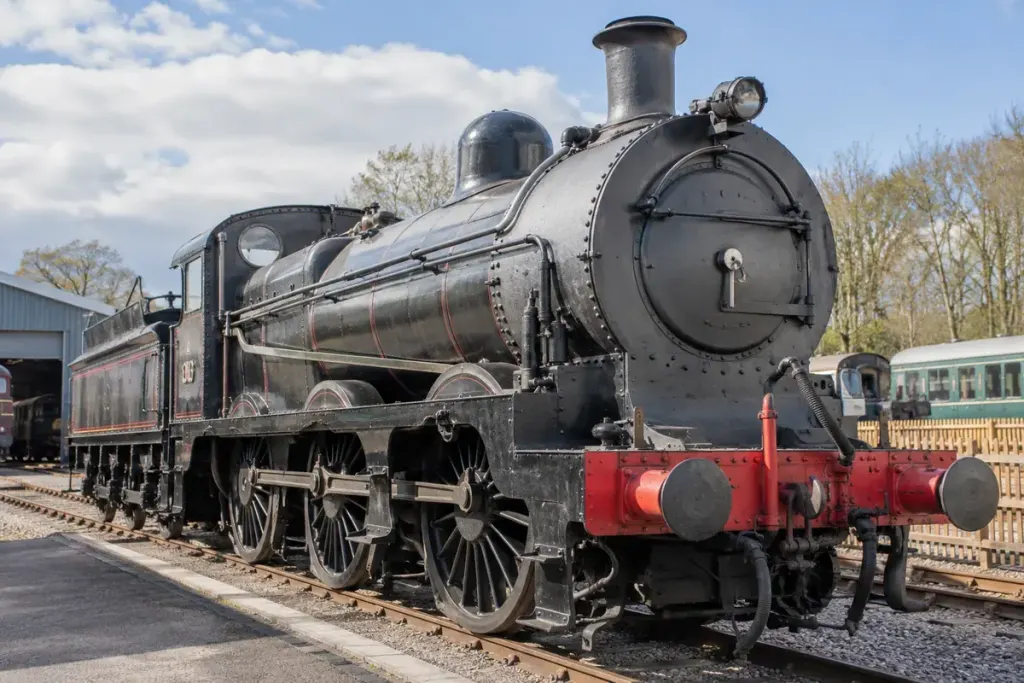
A steam locomotive’s boiler and superheater do related but different jobs. The boiler produces steam from water. A superheater then exposes that steam to further heat before it reaches the cylinders, where expansion does mechanical work.
The distinction is easier to follow as a journey than as a list of unfamiliar parts. Water does not simply travel through every tube visible in a locomotive diagram.
Follow the steam, then follow the hot gas
In a typical superheated locomotive, steam collected from the boiler enters a header and passes through superheater elements positioned in large flues. Hot combustion gases passing around those elements transfer additional heat. The steam returns through the arrangement and continues towards the cylinders.
The Northern Pacific Railway Museum’s account of superheaters, associated with locomotive 1364, provides a concrete restoration setting for these components. It is a useful reminder that an element is part of a larger assembly, not a loose pipe with an independent purpose.
Adding heat above the saturation temperature at the relevant pressure reduces the tendency for steam to condense immediately as it enters cooler working spaces. The practical result depends on the locomotive’s design and operating conditions; a museum diagram should not be read as a universal efficiency percentage.
When looking at a drawing, use two coloured pencil lines on a copy: one for steam and one for the combustion-gas path. Mark the boiler’s water space separately. This simple reading exercise helps distinguish the small boiler tubes, larger flues and superheater elements without needing to memorise every dimension.
What a preserved locomotive can tell you
A displayed component may come from a particular repair period. Ask whether the drawing represents the engine as built, a later modification or its current restoration. Historical locomotives often had working lives long enough for significant changes.
Stay within the museum’s visitor route and ask staff about inaccessible parts. Photographs of removed elements, maintenance records and labelled cutaway drawings can explain more than trying to peer into an opening. The most useful observation is where the component sits in the whole system and what passes through it.