
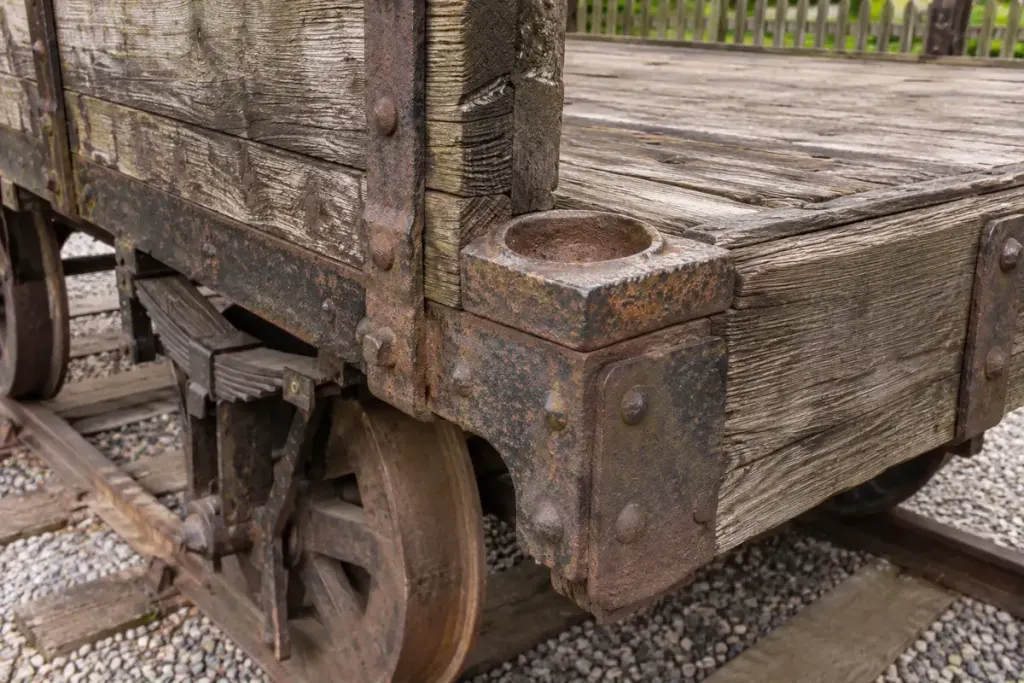
A shallow round recess near the corner of an old locomotive or freight car can look like a damaged fitting. In some cases it is a poling pocket, a surviving trace of a method once used to move railway equipment without a normal coupled connection.
The Feather River Rail Society’s historical discussion identifies examples on preserved equipment. A National Park Service historical equipment report also documents pockets and their relationship to push poles. These records explain an artefact; they are not instructions for present-day operation.
Why the recess existed
Historically, a pole could transmit pushing force between equipment positioned on adjacent tracks. The pockets provided locations for its ends. The arrangement exposed workers to serious hazards from moving equipment and a pole under load. It belongs in the history of railway work, not in a demonstration improvised by visitors or enthusiasts.
A pocket’s presence does not prove that a particular locomotive regularly performed the operation at every location where it worked. Equipment could retain features long after a practice declined. Individual railway records and dated photographs are needed to establish use.
Examine the object without filling gaps in the story
On a museum visit, note the vehicle’s identity, the position of the recess and whether the label identifies it. Compare both ends if the public viewing area permits. Stay behind barriers and never climb onto equipment to inspect a fitting.
An illustrative research note might read: “Circular recess at the left end-sill corner; identified as a poling pocket in the collection guide.” If the identification is uncertain, keep that uncertainty in the note rather than turning a resemblance into a fact.
Photographs can help show how a feature changed between equipment classes or production periods. Record the photograph’s date and source. A later restoration image is evidence of the preserved condition, which may differ from the working configuration.
Let the small fitting widen the question
The pocket leads beyond locomotive design to the organisation and risks of yard labour. Ask who performed switching tasks, what equipment was available and how operating practices changed. Contemporary manuals, accident records and railway archives can provide the context a surviving metal recess cannot supply alone.
That is the value of noticing small details: they offer a route into history while reminding us how much still needs to be documented.