
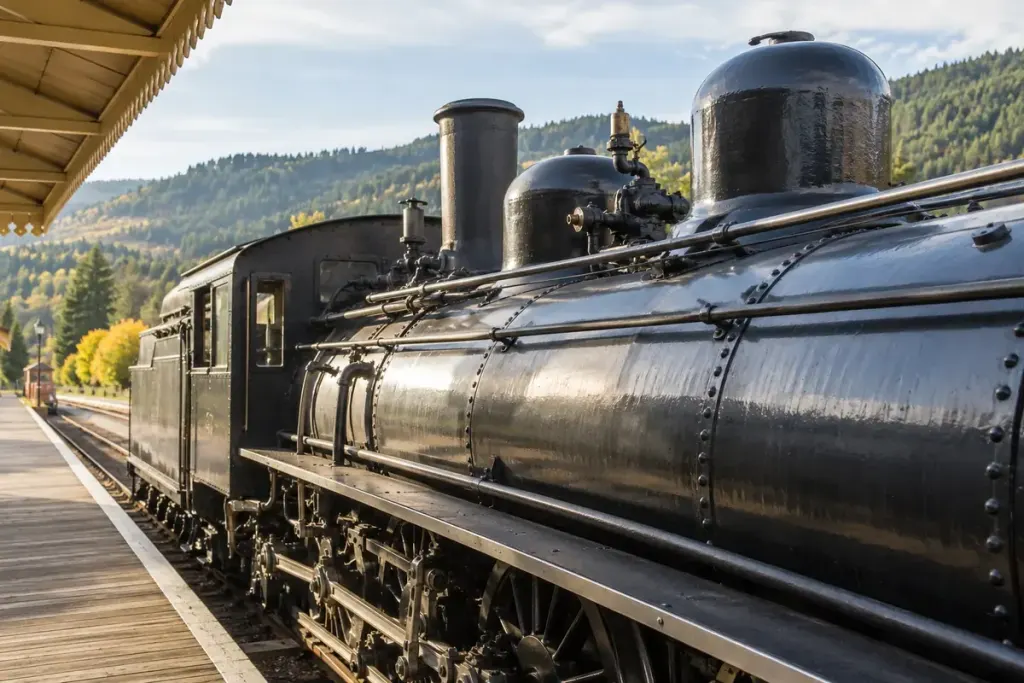
Several rounded fittings can rise above a steam locomotive’s boiler. They are not all containers for steam. One may hold sand, a material used where the locomotive’s wheels meet the rails.
The U.S. Geological Survey’s sand-dome explanation describes sand travelling down pipes to the track in front of the wheels to aid traction. The Steamtown park brochure likewise distinguishes the sand dome from the steam dome. These sources explain the general function; they do not identify every fitting on every locomotive.
Follow the evidence down the side
At a museum, read the label for the particular engine before relying on a diagram of a different class. From the permitted viewing area, look for pipes leading toward the driving wheels. Their route can help connect a fitting high on the boiler with the work it served near the rails.
Do not climb onto preserved equipment or touch controls to investigate. A static exhibit can still contain fragile or hazardous components, and missing pipework may reflect preservation history rather than original design.
Use the detail in a Montana research note
When examining a historical photograph, record the railroad, locomotive number if readable, date information and archive reference. Then describe the visible feature separately from your interpretation. “Two domes are visible” is an observation; assigning their functions may require a class drawing or a reliable technical description.
A photograph taken at an angle can hide a pipe or merge one fitting with another. Seek a second view before claiming a component was absent. Also avoid assuming that every engine used on a mountain route had the same arrangement.
This small distinction makes locomotive photographs more readable. Instead of seeing a collection of decorative shapes, you can begin connecting storage, pipes and wheels to the practical problem of traction—while keeping the identification tied to the evidence for that particular machine.