
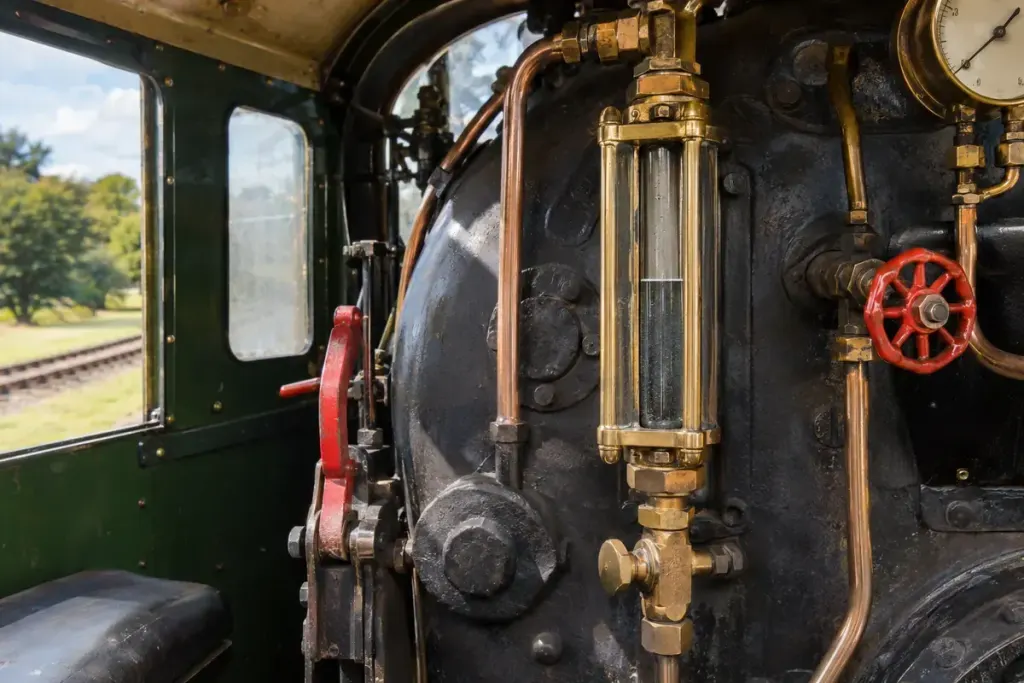
Inside a preserved steam locomotive’s cab, a small vertical glass can be easy to overlook beside the regulator, firehole and pressure gauge. Yet the water gauge was one of the crew’s essential sources of information. It made the boiler’s water level visible from the footplate.
The display was not simply another pressure dial. Pressure and water level answer different questions about what is happening inside a boiler.
A view into a hidden space
A gauge glass is connected to the boiler so that the level visible in the glass can indicate the water level within the connected system. The surrounding fittings, protection and checks matter: a glass that is blocked, damaged or otherwise unreliable cannot be treated as a trustworthy window.
The Mid-Continent Railway Museum’s account of restoring locomotive 1385, “On the Level”, explains the importance of water-gauge arrangements and their place in steam-locomotive inspection requirements. The restoration story is a useful way to see the object as working equipment rather than decorative brasswork.
Look for its relationship to the other instruments
At a museum, first identify the gauge from the interpretation panel or a guide’s explanation. Then notice where a crew member could see it while attending to other tasks. Was it protected? Was there more than one way to check water level? How did the cab layout keep important information within view?
Do not turn valves or handle controls on a displayed locomotive unless an authorised demonstration specifically permits it. This is a historical reading exercise, not operating guidance for a pressure vessel.
Why the surrounding story matters
A locomotive cab photograph captures only an instant. A visible level in an old image does not, by itself, tell you the train’s motion, operating conditions or what checks the crew had made. Equally, a modern restored fitting may differ from equipment used at an earlier stage of the locomotive’s life.
Make a note of the locomotive, the date of the display or photograph and the source explaining the fitting. If a guide describes a replacement, record that distinction rather than assuming every component is original.
The small glass becomes more interesting when you connect it to the crew’s workload. They were not merely producing steam; they were continually interpreting several kinds of information while controlling a moving machine. A gauge that makes one hidden condition visible helps explain that work.