
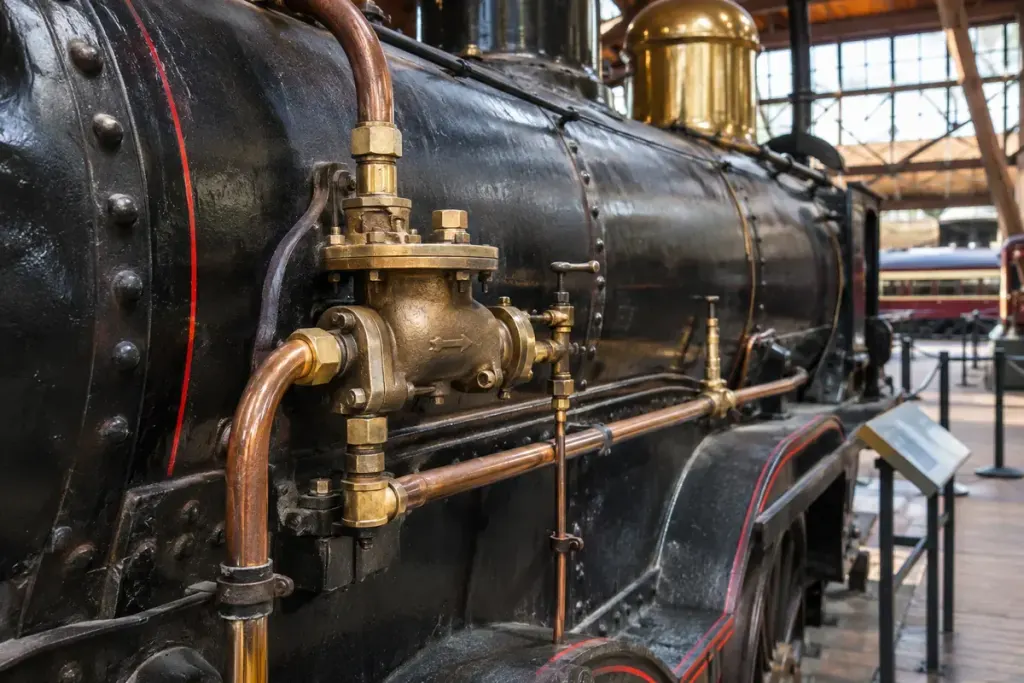
A steam locomotive needs water to enter a boiler that is already under pressure. Explaining the injector answers part of that puzzle, but it leaves another question: what prevents boiler water from travelling back along the feed when delivery stops?
The delivery clack is a non-return valve. In the Bluebell Railway locomotive department’s explanation of an injector, the delivered water reaches sufficient pressure to lift the clack and enter the boiler. The valve and the injector cooperate, but they do different jobs.
Pressure-making and direction-controlling
The injector creates the conditions needed to feed water into the boiler. The clack permits flow in the intended direction and closes against reverse flow when the pressure relationship changes. Calling both components “the water feeder” can hide the distinction.
A useful analogy is a door that opens from one side when pushed appropriately. The door does not create the push. Like any analogy, it leaves out the real valve’s materials, pressure, temperature and maintenance requirements.
Read a drawing in the direction of flow
On a museum diagram, trace the water route from its source towards the boiler. Mark the injector and then the non-return function separately. Look for the drawing’s legend: terminology and arrangements vary by locomotive design, and a visible external fitting is not always enough to identify everything inside it.
The Bluebell example concerns a British locomotive component. It explains a general engineering function, but it is not evidence that a particular Montana locomotive used the same layout. For that, consult the engine’s own drawings, maker’s documentation or a knowledgeable museum curator.
A small component in a maintenance record
References to valve seats, sealing faces or clack inspection can seem minor beside a boiler overhaul. They become more meaningful when you understand the one-way duty involved. Record the locomotive, date and exact component named rather than merging several water-feed repairs into one event.
This is a guide to interpreting historical machinery, not operating it. Boiler fittings must be assessed and maintained by competent personnel under the relevant procedures. A preserved engine’s attractive brasswork is not an invitation to test a handle or remove a cover.