
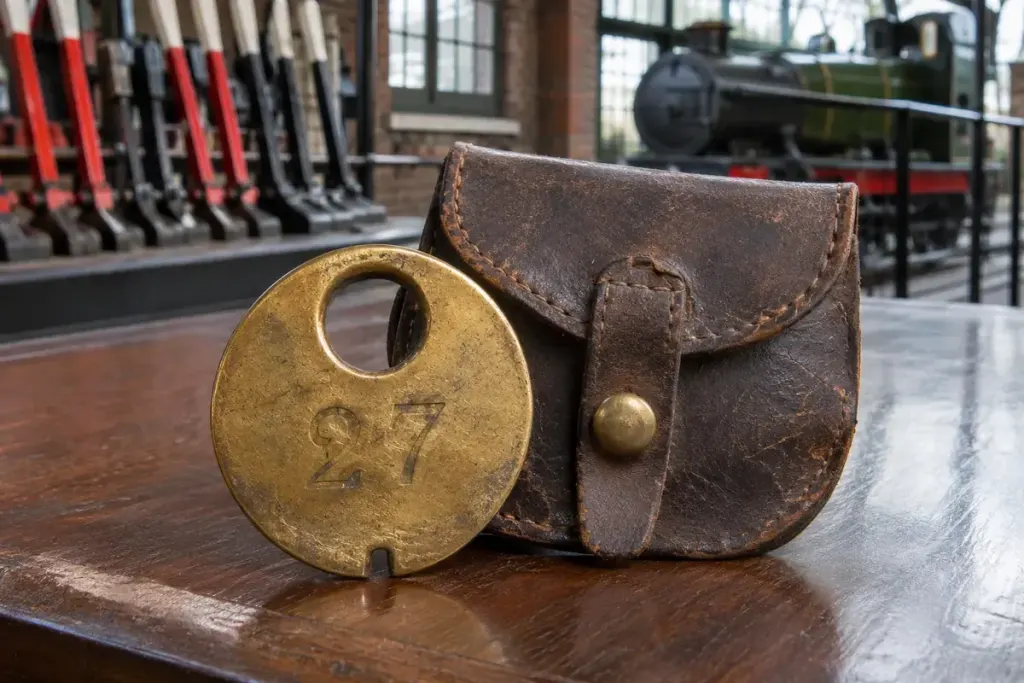
A metal tablet in a museum case may look less impressive than a locomotive, yet it points to one of railroading’s central problems: controlling movements when trains share a single track. In token-based systems, possession of the appropriate token formed part of the authority to enter a defined section.
The object must be understood within its operating rules and equipment. It was not simply a general permission to travel anywhere on the railway.
Read the places on the object
The Science Museum Group’s Somerset & Dorset tablet record identifies a tablet for the Shillingstone–Sturminster section and a Tyer instrument. The place names make the section-specific nature tangible. A separate Lynton & Barnstaple collection record describes tablets associated with automatic tablet instruments.
These are British examples. Their presence in a railway-history discussion does not establish that the same equipment or procedures were used on a particular Montana route. That would require evidence from that railway’s own records.
A useful museum note has three layers
- The object: its shape, inscriptions, number and any maker identification.
- The section: the two places or limits to which it relates.
- The system: the instruments and rules that governed issue, possession and return.
A photograph may reveal the first layer while leaving the others uncertain. Record the catalogue number so you can return to the description instead of guessing from appearance.
For an imagined research project, two tablets with similar shapes but different place names should not be treated as interchangeable duplicates. Their similarity may reflect an equipment family; their inscriptions may connect them to different sections. A timetable, signalling diagram or operating instruction can help place each in context.
When you next encounter a token in a collection, start with the small lettering rather than the dramatic train photograph beside it. The most revealing question is what exact movement the object helped authorise, and which evidence explains that role.