
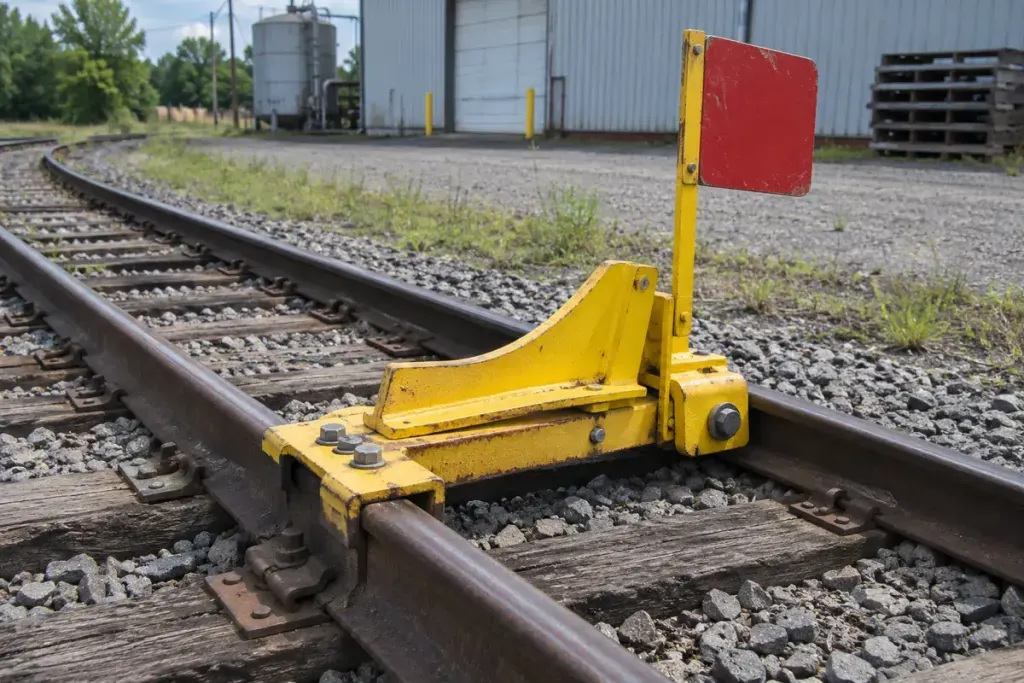
Most railway equipment is designed to keep wheels following the rails. A device called a derail appears to reverse that purpose. In a controlled protective arrangement, it can divert unintended rolling equipment off a track before it reaches a place where the consequences could be worse.
The Federal Railroad Administration’s inspection manual describes derailing devices in relation to diverting free-rolling equipment. That protective role makes the object easier to understand in a historical photograph or museum collection.
Read the surrounding railway layout
In an archive image, first identify whether the device is shown on a siding, near a work area or beside another piece of infrastructure. Then look for a caption, track plan or operating document that explains the location. The object alone may not reveal what movement it was intended to guard against.
Do not confuse every unusual rail fitting with a derail. Turnouts guide an authorised movement onto another route; other equipment has different functions. If the image is unclear, record the identification as tentative and seek a catalogue description rather than treating a visual guess as fact.
Separate design purpose from a complete safety system
A derail is not a substitute for all the other controls involved in securing and operating railway equipment. Its historical significance comes from the particular system in which it was installed. Ask who operated it, which movement it protected and what evidence establishes those answers.
For a museum notebook, record the object number, photograph date, documented location and source of identification. A later photograph may show a preserved object after it has been moved from its working position.
Observe railway infrastructure only from authorised public areas and never touch or operate track equipment. A museum display or archival plan provides a much better setting for this investigation than an active siding. The interesting question is how the railway controlled unwanted movement, not how to experiment with the device yourself.