
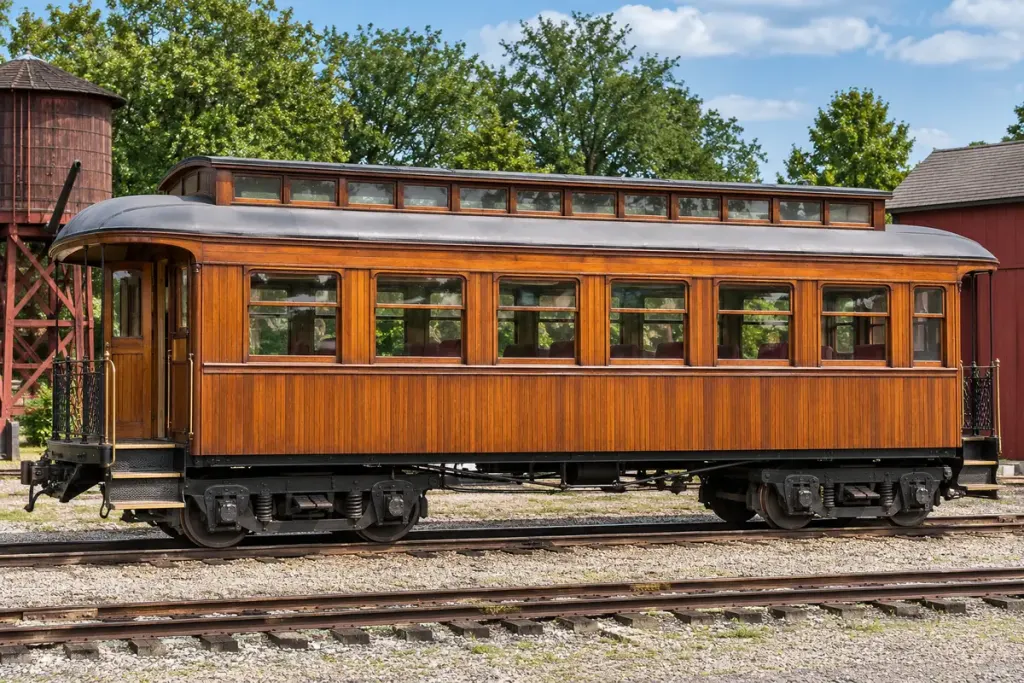
Some older passenger carriages have a narrow raised section running along the centre of the roof. Seen from the platform, it can resemble a smaller roof sitting on the larger one. This clerestory arrangement provided space for upper windows associated with light and ventilation.
The Nevada County Narrow Gauge Railroad Museum’s account of Coach 52 offers a specific preserved-vehicle example. It is a California example within wider North American railway history, not evidence that every Montana carriage used the same construction.
Follow the roof into the room
When examining photographs, compare an exterior side view with an interior view if both are available. Look for the relationship between the raised roof strip, the upper glazing and the passenger space below. A silhouette alone cannot show whether a particular window opened or how later alterations affected it.
Make a note of the carriage’s identity and the photograph’s date. A museum image, an early service photograph and a restoration drawing can describe different stages in the same vehicle’s life.
Ask what is original and what was reconstructed
Restoration accounts may distinguish surviving material from replacement work. That distinction matters when interpreting colours, glazing patterns and fittings. A present-day feature can be a carefully researched reconstruction without being an untouched piece of the original vehicle.
For a research notebook, keep three columns: visible feature, documentary description and remaining question. “Raised central roof” belongs in the first; “restored clerestory glazing” may belong in the second. Leave the third open when the record does not establish a function or date.
This approach makes a small architectural detail useful evidence. The clerestory is more than an attractive outline: it connects the carriage’s exterior form with the conditions passengers experienced inside. Its exact story still belongs to the particular vehicle and the records that survive with it.