
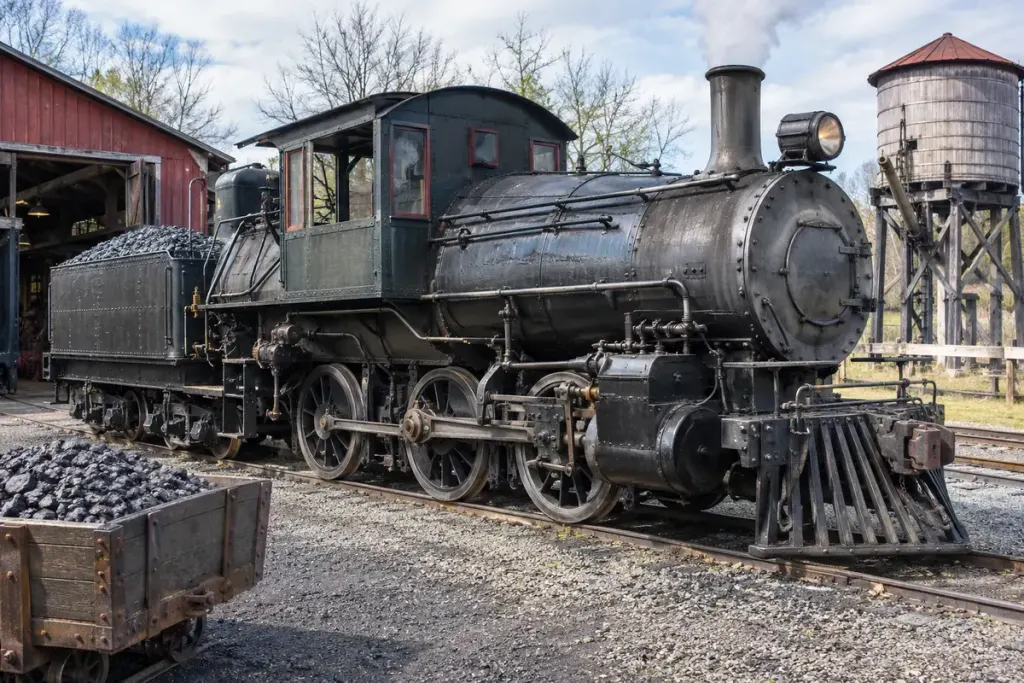
Some steam locomotives look unusually broad at the rear of the boiler, while the driver’s cab sits farther forward than expected. Fuel is part of the explanation. The Wootten firebox was associated with a wide grate intended for burning anthracite fuel, including smaller material that required a suitable firebed.
A historical patent discussing Wootten-type locomotive boilers explicitly connects the arrangement with anthracite and contrasts its combustion characteristics with other coal. Such documents are useful primary evidence, but they describe a particular design problem rather than every locomotive that later used a broad firebox.
Look for the grate’s space
The firebox surrounds the fire; the grate supports the fuel bed beneath it. Increasing grate area can require more width than a conventional arrangement conveniently provides. That physical requirement affects the space available around the rear of the boiler and the crew’s working positions.
The distinctive camelback arrangement put the driver’s cab astride the boiler ahead of the broad firebox, with the fireman’s work remaining farther back. When looking at a preserved example, ask where each crew member stood and how they communicated. The shape is a clue to working conditions as well as engineering.
Read the individual locomotive’s record
Do not identify the whole history from one silhouette. Check the museum’s number, builder, railway and modification dates. A locomotive may have been rebuilt, and a surviving photograph may show a later configuration rather than its original appearance.
A useful museum note has three sketches: the boiler outline, the firebox width and the cab position. Add the stated fuel and the source of that information. If a label does not identify the firebox type, leave the question open rather than filling the gap with a familiar name.
This is one reason railway history rewards looking beyond wheel arrangements. Two locomotives with similar wheels may have been designed around different fuels and operating needs. Following the firebox makes the local supply of coal visible in the machine’s shape.