
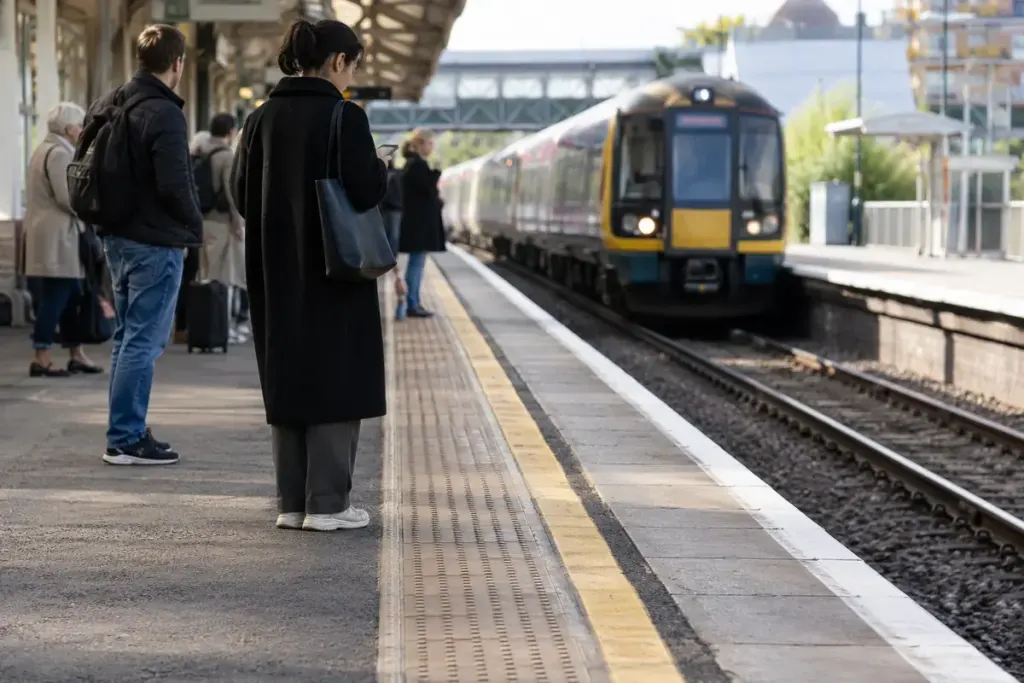
A historic station platform can contain several generations of design in a few metres. Stonework may belong to an early rebuilding, a shelter to a later service expansion, and a textured strip to a much more recent accessibility project. Reading every feature as part of the original railway misses that layered history.
On some passenger platforms, tactile paving provides a detectable warning near the edge. The surface is intended to communicate through texture as well as sight. Its installation is therefore more than a decorative change to the paving pattern.
A modern feature with its own history
Network Rail’s account of platform accessibility improvements in Scotland gives a documented example of tactile surfaces being added across an existing railway. It illustrates why the age of a station and the date of its platform treatment need to be recorded separately.
Do not transfer one country’s layout rules to another. Surface patterns, placement and accompanying markings depend on the applicable standards and station design. A photograph of a British platform is useful comparative material for a Montana railway enthusiast, but it does not establish what a local operator is required to install.
Photograph the layers without approaching the edge
From a permitted, safe position, include enough of the platform to show the strip in relation to the shelter, signs and walking route. Record the station, date and direction of view. Follow the operator’s markings and instructions; a texture is not an invitation to stand on it for a closer picture.
When writing a station history, look for accessibility project announcements, dated photographs and rebuilding records. Distinguish a confirmed installation date from a feature merely visible by a certain year. An undated image cannot provide a reliable construction date on its own.
These details broaden a railway account beyond locomotives and timetables. They show how a station continues to change as passenger needs, operating practices and accessibility expectations develop.