
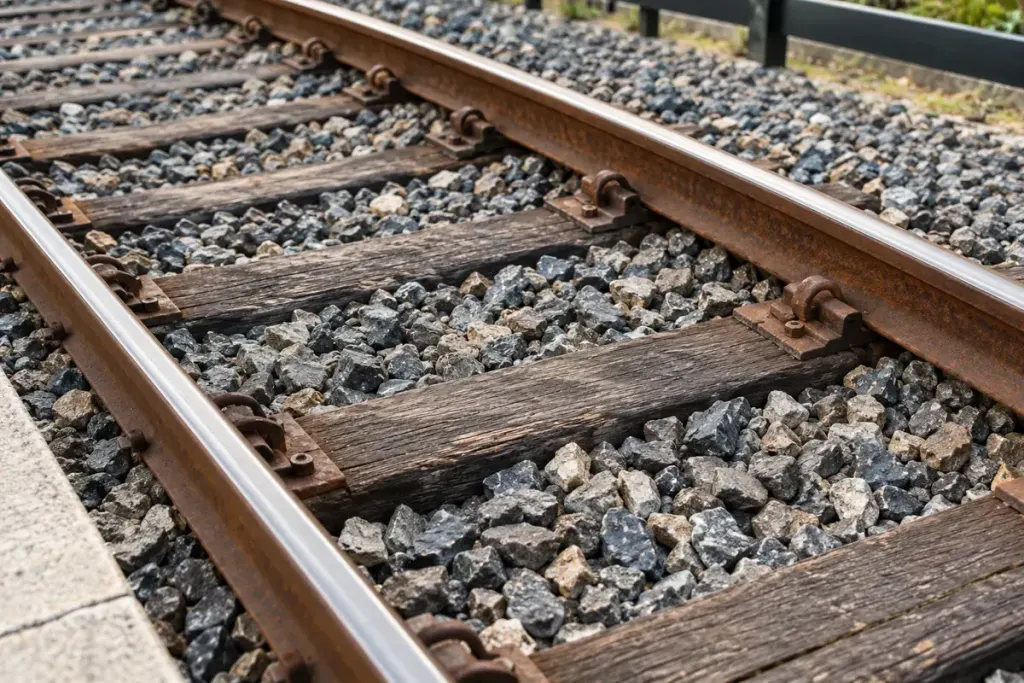
In a railway photograph, the locomotive usually gets the attention. Look down and the bed of angular stone tells another story: the track is a structure that must support loads, hold its geometry and be maintained over time.
Ballast is the stone bed associated with many conventional tracks. Rails, fastenings, sleepers and the layers beneath them work together. Not every railway uses ballasted track; some systems use slab construction, so identify what the photograph actually shows.
Follow the load into the ground
The sleeper does not sit on a perfectly solid floor. The ballast beneath and around it helps support and restrain the track while allowing a maintainable arrangement. Its condition and the underlying formation matter to the railway’s performance.
Network Rail’s description of its track-treatment fleet explains how tampers and stoneblowers work with ballast beneath sleepers. These machines make sense once you see the stones as part of the support system rather than a surface scattered beside the rails.
Read maintenance clues cautiously
A historical image may show freshly worked stone, vegetation or workers handling the track bed. Describe the visible evidence before assigning a cause. A dark patch alone does not establish drainage failure, and a photograph cannot reveal every layer below the surface.
For an original museum exercise, sketch one sleeper and the ballast visible around it. Note the rail fastening, the shoulder of stone beyond the sleeper and any drainage feature identified by the exhibit. Record the museum’s explanation separately from your own inference.
Connect the detail to the railway’s period
Materials, track designs and maintenance methods have changed across places and eras. A modern main-line photograph is not a complete guide to a nineteenth-century branch line. Use captions, engineering records or a museum catalogue to place the image in context.
Observe only from public or authorised areas. Railway tracks and their surroundings are not places to collect samples or inspect construction at close range. From a safe viewpoint, the ordinary-looking stones already offer a useful question: how did this railway keep its rails in the position the trains needed?