
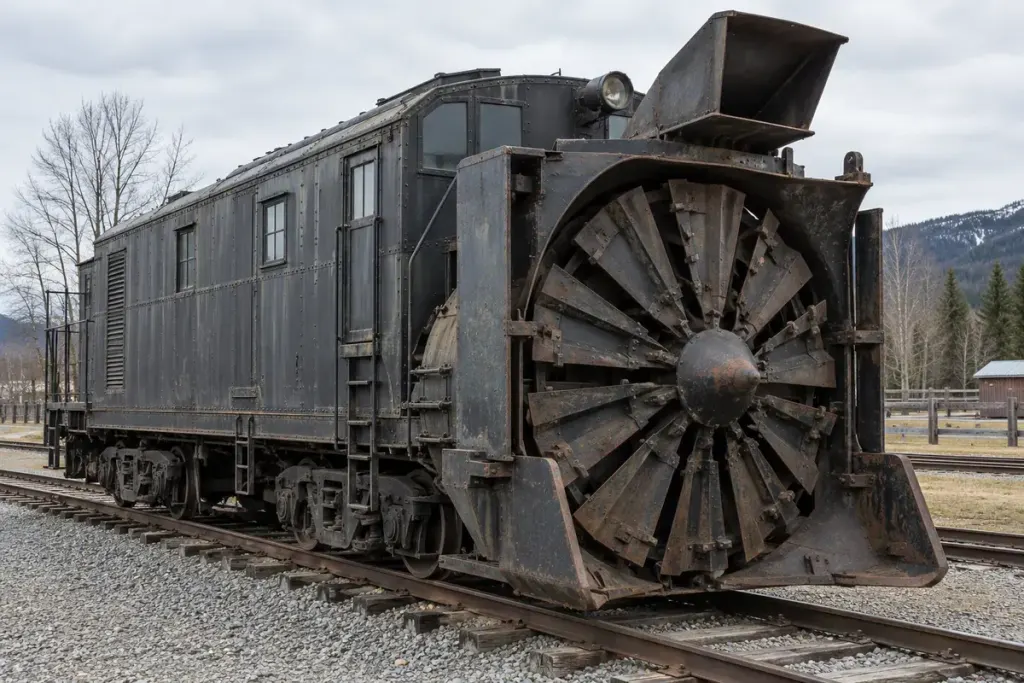
The large circular mechanism at the front of a rotary snowplow makes it one of the railway’s most recognisable work vehicles. Its purpose becomes clearer when you ask where the snow can go. Moving it sideways with a blade is not the same task as cutting into it and throwing it away from the track.
In a 2020 account of its rotary fleet, BNSF explains that rotaries are useful for deep accumulations and locations where surrounding cuts or hills leave inadequate room to push snow clear. This is an operating explanation from the railway, not a claim that a rotary is used for every snowfall.
Follow the snow through the machine
Begin with the cutting equipment at the front, then look for the discharge arrangement. The Mid-Continent Railway Museum’s description of Oregon Short Line No. 762 identifies its rotating front blade and directional chute. The preserved vehicle gives a specific example of the general idea.
A museum photograph may also show a boiler, tender or supporting locomotive. Do not assume that the machine driving the rotary mechanism also propels the vehicle along the rails. Establish that from the equipment record for the particular plow. Machines from different periods can have different power arrangements.
Compare the working problem, not only the silhouette
For a railway-history notebook, place a rotary photograph beside a conventional plow image. Ask three questions: how does each engage the snow, where does it send it, and what supporting equipment appears in the record? Those questions explain more than calling one vehicle the more powerful-looking machine.
Keep the example’s location clear. A museum vehicle from another state can help explain a technology without proving that it worked on a particular Montana line. To make that connection, look for an operator roster, dated photograph or operating account naming the route and equipment.
Study working machinery through authorised public material and museum access. Winter railway operations require controlled working areas. The historical reward is understanding why a specialised machine was needed, rather than treating an impressive front wheel as a complete explanation of how a mountain railway stayed open.