
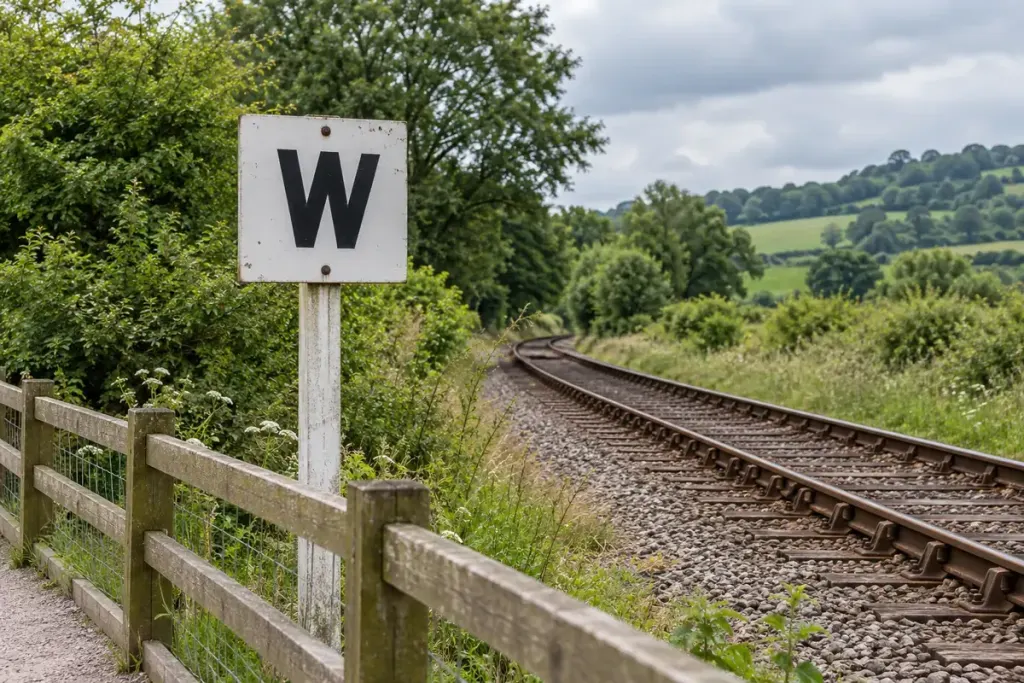
A small board bearing a letter beside a railway can seem less interesting than the locomotive passing it. Yet the board may explain something the photograph cannot let you hear: an instruction to the driver to sound a warning at a particular point.
Whistle-board designs and operating requirements belong to specific railways and periods. A British sign is not automatically a guide to an American photograph, and a preserved object may no longer stand where it originally served its purpose.
In a museum notebook, include the board’s wording or symbol, its direction, the stated railway and the date of the photograph or exhibit label. Look for a nearby crossing, tunnel or other feature, but describe the relationship as a possibility until the records support it.
Modern British documentation illustrates why context matters. The Scotland Sectional Appendix contains route-specific information about whistle boards and warning arrangements. It is evidence of instructions for that railway context, not a universal decoding key for every historical sign.
Do not make the photograph say more than it shows
Imagine a historic image with a board and a farm crossing visible. The scene may suggest a connection, but it does not establish the exact warning sequence, the hours a rule applied or whether the board was newly installed. An operating rulebook, route appendix or dated railway notice can answer questions the image leaves open.
Compare the exhibit label with the source record where available. If the sign has been moved during preservation, distinguish its present display position from its former working position. That difference can be central to its story.
Make observations from permitted public areas. Never enter a railway right-of-way to read a sign more closely, and never use an old instruction as guidance for current railway operations.
A useful caption might identify the board and its documented setting, then state what remains uncertain. That modest account teaches more than confidently assigning a modern rule to an undated object.