
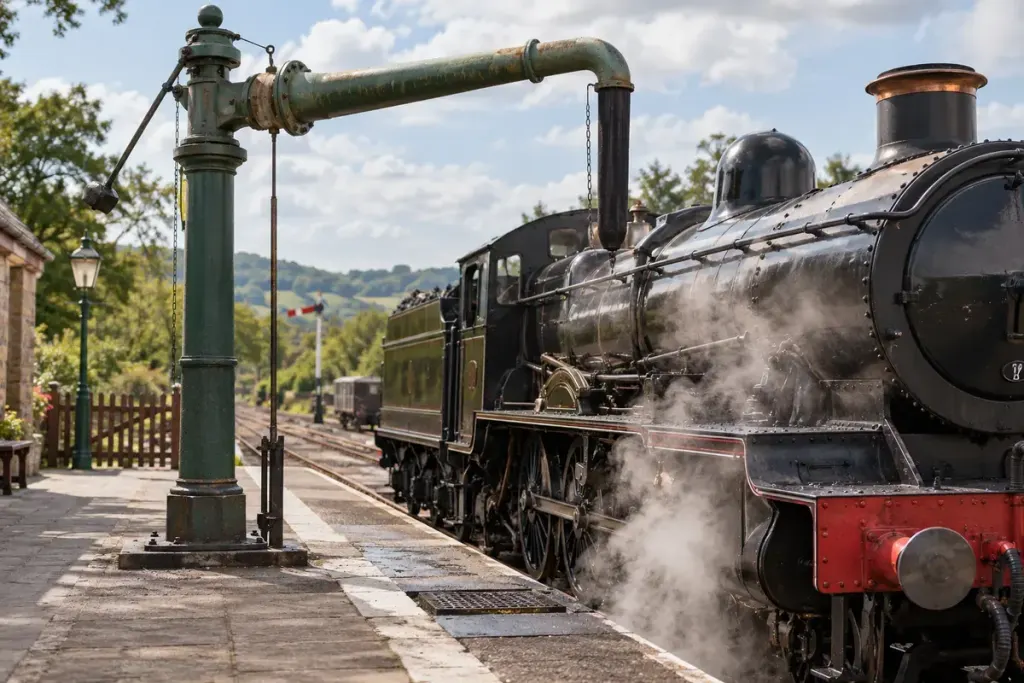
A tall pipe beside a heritage railway track can be easy to overlook when a locomotive is nearby. Yet a water column or crane points to an essential part of steam operation: getting a substantial supply of water into the locomotive’s storage tank or tender.
The Monticello Railway Museum describes installing a water crane supplied by an adjacent overhead tank. Its account also identifies the crane’s earlier railway use. That combination of an object, its supply and its documented history is more informative than a photograph of the pipe alone.
Trace the system around the object
From a permitted visitor area, look for the relationship between the track, delivery spout and water storage. Where would a locomotive need to stop? What part of the equipment moved to reach the filling opening? Museum diagrams or staff explanations can reveal pipes and valves that are not visible above ground.
Do not assume every installation had the same arrangement. Water could be supplied through different structures, and a surviving example may have been moved or reconstructed. Ask which components are original, which are replacements and whether the exhibit is operational.
Use the detail to ask a larger historical question
A railway map often emphasises destinations, but steam-era operation also depended on servicing points between them. Water infrastructure helps explain why a seemingly modest location mattered to crews. Local records may show how supply, climate or maintenance affected a particular line.
For a Montana research project, use a documented local installation rather than transferring another museum’s story onto it. Record the place, date, railway and source of any photograph. A water crane in an image supports a question about servicing; it does not by itself establish the capacity, daily traffic or working routine of that location.
Stay outside restricted areas and treat working heritage equipment as railway machinery, not playground furniture. The most useful visit combines careful observation with the museum’s evidence.