
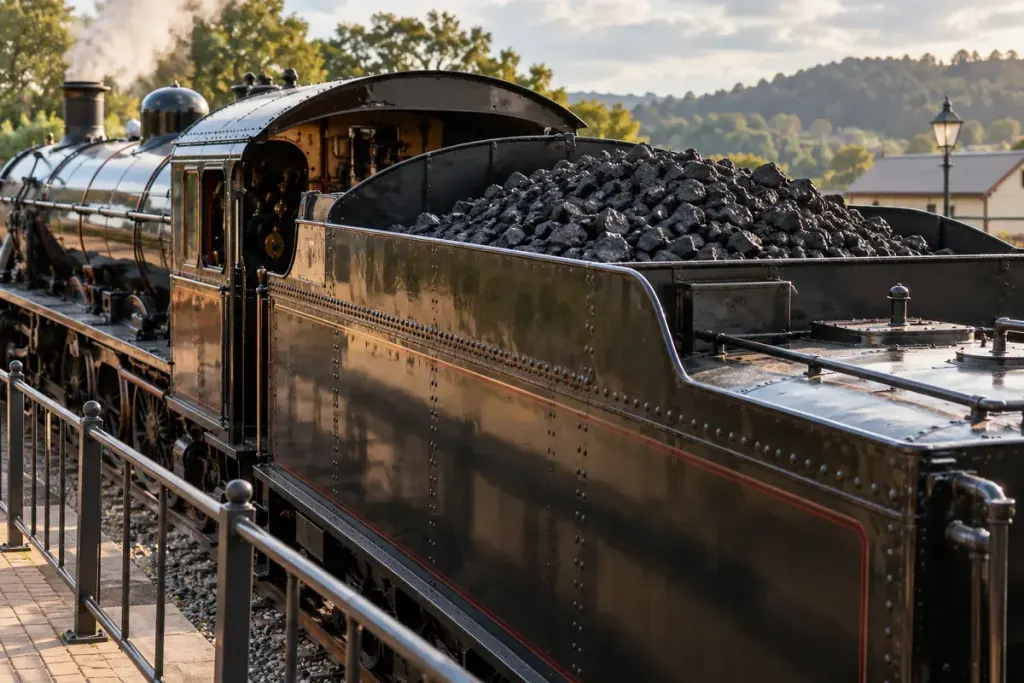
The vehicle immediately behind a steam locomotive can look like a plain extension of the engine. Look more closely and the tender reveals a practical part of railway operation: carrying the fuel and water needed along the route.
A documented example is the National Register record for Chesapeake and Ohio locomotive 1308, which lists separate coal and water capacities for its tender. Those figures describe that locomotive’s equipment, not a standard capacity shared by all steam engines.
Look for two different supplies
A coal bunker is often easier to recognise than the water space. Do not infer that everything visible behind the cab is fuel storage. Read the museum diagram or technical description to understand how the particular tender was divided.
Fuel arrangements also changed. Some locomotives used oil, and conversions can alter what a preserved tender contains. A dark pile in a display photograph is not enough to reconstruct the engine’s entire working history.
Keep three labels in your notes: the locomotive’s identity, the tender’s documented identity and the date of the arrangement being described. Ask whether the displayed pairing is original, a later working combination or part of a restoration.
Capacity does not give a fixed range
A larger water figure does not translate into one universal distance between stops. The operating circumstances matter. Instead of inventing a mileage from the capacity, look for route records, operating documents or the museum’s explanation of servicing arrangements.
For a useful museum question, ask: “Where would this locomotive have replenished its supplies on the route shown here?” That connects the vehicle to railway infrastructure without assuming that every line had identical facilities.
View the tender from authorised visitor areas. Do not climb onto it to inspect an opening or step into the space between vehicles. Historic equipment can remain operational, and museum access boundaries are part of the visit.
A good photograph can include the cab-to-tender relationship and the interpretation panel in separate frames. Later, the written record helps you distinguish what you actually saw from what you inferred. The tender then becomes evidence of how the railway worked, rather than an anonymous shape behind the locomotive.