
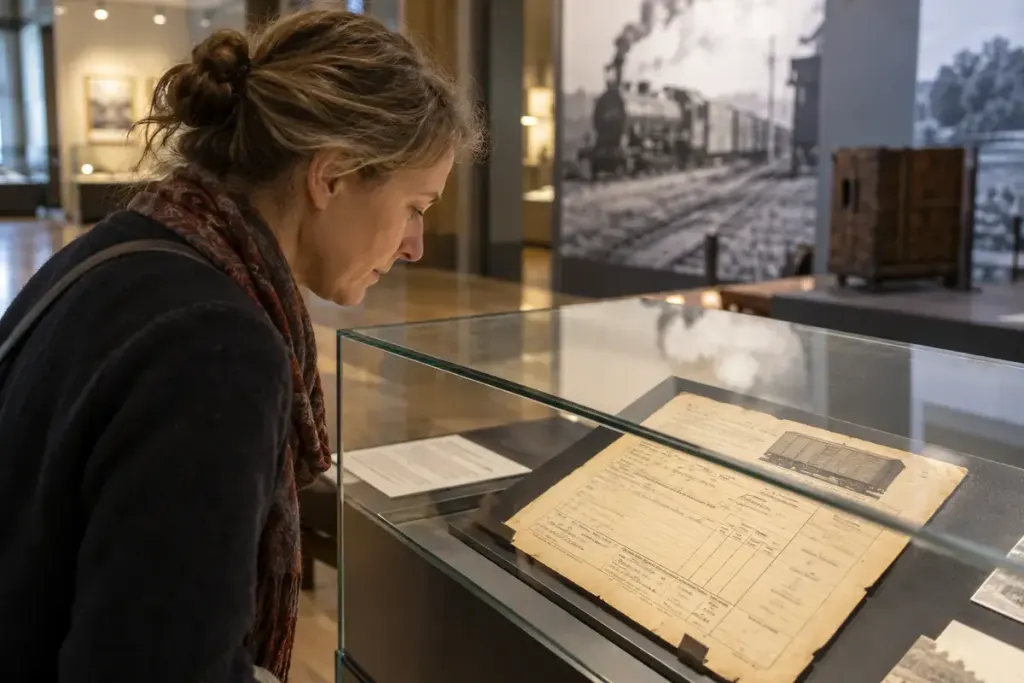
A passenger map tells you where a railway offered a route. A freight label or waybill can raise a different set of questions: what was being moved, who sent it and how the railway expected it to reach the next handler.
Begin with the object in front of you rather than a complete story about the journey. Record the archive or museum reference, the document type, the date if visible and the exact wording of names and locations. A form printed for a company is not necessarily evidence that every field was completed or every proposed movement occurred.
Separate the form from the entries
Printed headings show what the record was designed to capture. Handwritten notes, stamps and alterations show how this particular copy was used. Transcribe both, keeping uncertain letters marked as uncertain instead of silently replacing them with a plausible town name.
Look for a consignor, consignee, destination, routing instruction, weight or charge. Not every document includes all of these. An abbreviation may describe a handling instruction rather than a place, and a station name may have changed over time.
Build a question that another record can answer
A fictional label might name a shipper in one town and a receiver in another, with a third railway’s stamp. That suggests an interchange worth investigating; it does not prove the exact train or date of arrival. A company timetable, freight tariff, map or related business correspondence may help narrow the possibilities.
Ask the collection staff whether the item belongs to a larger group of records. Nearby documents can explain a sequence that a single attractive display piece cannot. Respect handling and photography rules, and keep personal details from more recent records out of public notes where appropriate.
End your research note with two lists: what the document directly shows and what still needs corroboration. A modest, well-supported account of one shipment is more useful than a confident route reconstructed from assumptions hidden between the lines.