
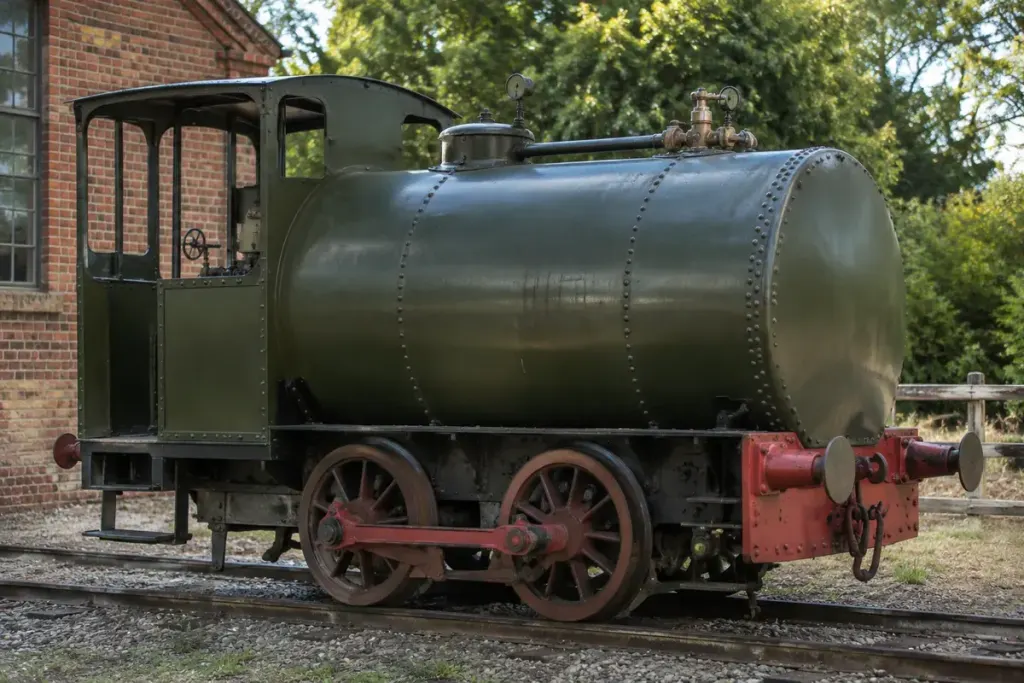
At first glance, a fireless locomotive can look like a steam engine missing some familiar equipment. Its large cylindrical vessel resembles a boiler, but the locomotive does not carry a fire to keep producing heat. It starts work with energy supplied from elsewhere.
The Science Museum Group’s record of the fireless locomotive Imperial describes a pressure vessel replenished from a factory steam supply. The Rochester & Genesee Valley Railroad Museum’s Connecticut Light & Power No. 2 provides another preserved example of the type.
Stored heat still has to come from somewhere
The vessel stores hot water and steam under pressure. As steam is used and pressure falls, some of the hot water can produce more steam. Eventually the available pressure and energy decline enough that the locomotive needs another charge.
Calling it fireless therefore describes the locomotive, not an energy-free railway. A factory’s stationary steam plant supplied the energy. The arrangement linked the locomotive’s work to a place where that supply was available.
Read the industrial setting with the machine
When viewing a museum example, ask what work it originally performed, where it was charged and how far its duties took it from that point. A compact industrial shunting job poses a different problem from a long main-line journey.
Make a two-column notebook entry: features visible on the vehicle, and facts confirmed by the collection record. Put the vessel, cab and running gear in the first column; put build date and former owner in the second only when the museum supplies them. A similar silhouette is not enough to identify an individual locomotive.
These examples help place regional railway history within a wider technological story. They do not establish that a particular Montana railway used the same equipment; that would need its own roster, photograph or company record.
The most revealing question is often not why the locomotive lacked a fire, but what the surrounding industrial site already provided. The vehicle makes more sense when the factory steam supply is treated as part of the system.