
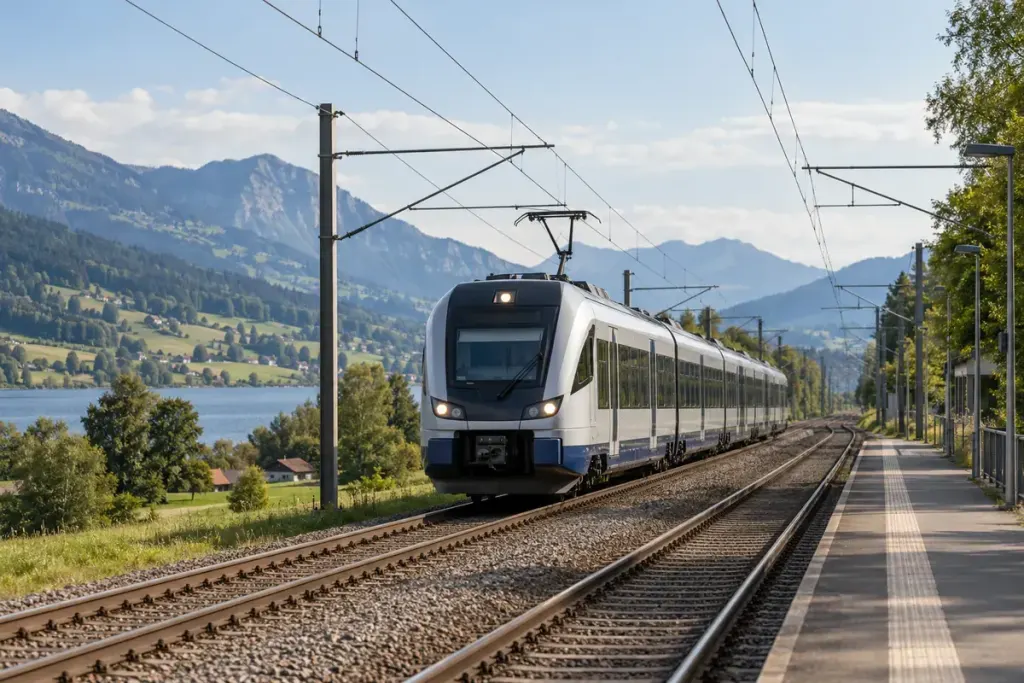
In a photograph of an electric locomotive, the most revealing detail may sit above the roof. A raised framework reaches toward the overhead wire, maintaining a moving electrical contact as the vehicle travels. That framework is the pantograph.
It is easy to mistake it for a rigid pole. In operation, its geometry and contact arrangement allow it to follow the wire while the train moves beneath it. The electricity collection system depends on both the vehicle equipment and the overhead line; neither can be understood fully in isolation.
Find the contact wire
Overhead equipment can contain several wires, supports and suspension components. The pantograph’s contact strip meets the contact wire, rather than simply touching any line above the train. SNCF’s explanation of catenary incidents describes this transfer of power through the roof-mounted pantograph.
A Network Rail guide to overhead electrification also explains why the contact wire follows a controlled zigzag relative to the track: this spreads wear across the pantograph instead of cutting one groove. The exact equipment and electrical system vary between railways and periods.
Use the detail as a question, not a complete identification
When studying an archive image, note the pantograph shape, whether it appears raised, and which other overhead structures are visible. Then look for the locomotive identity, route, date and a reliable caption. A roof detail can support research, but it cannot establish the voltage or operating rules by itself.
For a useful comparison, place two properly identified photographs side by side. Record what is visible in each and keep uncertain interpretations separate. One picture may show a different collector design; another may show an electric locomotive with its collector lowered. Neither observation alone tells you why the train was in that condition.
Modern examples can help explain the mechanism in older railway photographs, including those from electrified routes in North America, but should not be presented as evidence of a particular historic installation. Observe working railways only from authorised public locations. Overhead electrical equipment is dangerous even when no train is nearby, and a photograph never justifies approaching it.