
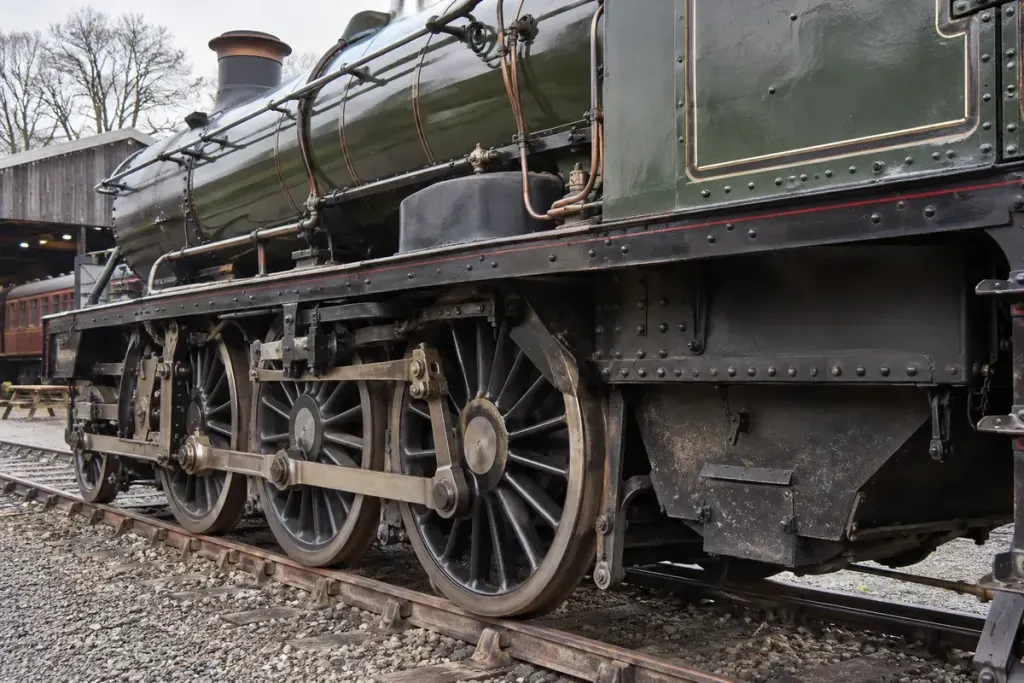
The dramatic parts of a steam locomotive tend to attract attention first: driving wheels, connecting rods and the smokestack. The ashpan tells a quieter story. Beneath the firebox, it relates to what happened after fuel had given up much of its useful heat.
On a coal-burning locomotive, ash and small material passing through the grate needed somewhere to collect. The ashpan formed part of that arrangement. Its shape and operating details varied with the locomotive; a museum photograph should not be treated as a universal diagram.
Read a restoration photograph carefully
The National Park Service documents work around the firebox and ashpan area of Big Boy No. 4012 in its restoration photograph. Removed components make otherwise hidden construction easier to see. That locomotive is a specific comparison example, not evidence that every Montana engine used the same arrangement.
When studying a local railway collection, first identify the engine number, fuel type and date of the photograph. Then ask whether the picture shows an operational locomotive, a stored engine or a restoration in progress. A gap visible during repair may have been covered in normal service.
Useful questions for a museum guide include where the ash was released, how workers reached the area and which surviving parts belong to the locomotive’s working life. Those questions connect a mechanical detail to labour at the servicing point.
Give maintenance a place in the railway story
A timetable shows when a train moved. It rarely shows all the cleaning and preparation around that movement. Looking for ash handling in photographs of engine facilities adds another line of enquiry alongside coaling, watering and inspection.
Keep any interpretation tied to the evidence available. If a photograph does not show the ashpan clearly, describe the uncertainty. A careful question about an obscured component is more useful than confidently labelling the wrong piece of metal.