
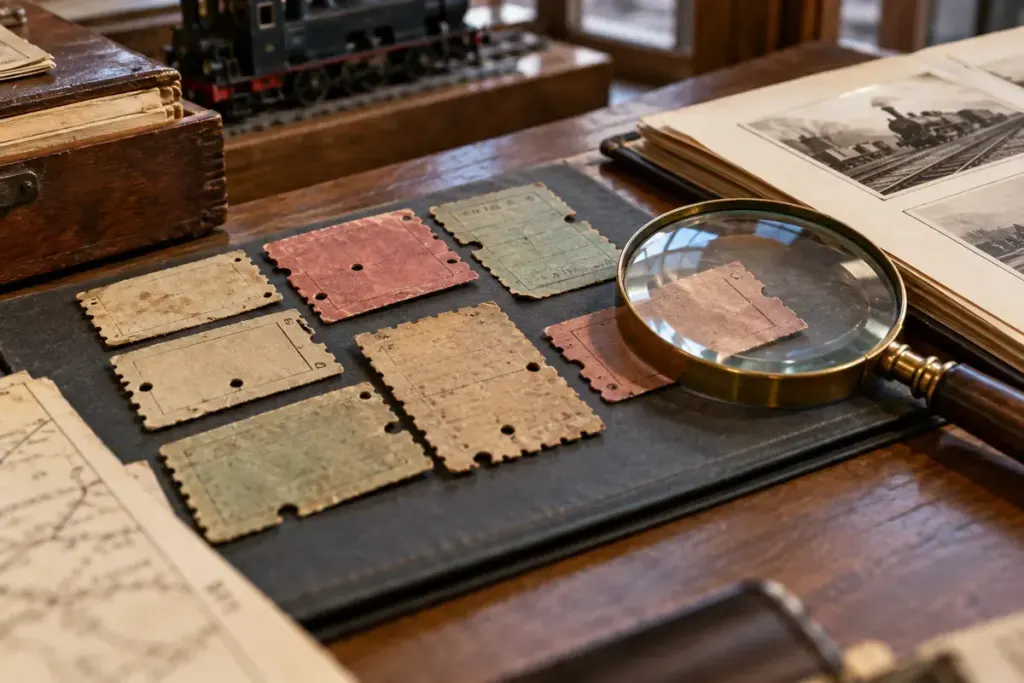
A small railway ticket can look less impressive than the locomotive beside it. Yet its cramped printing may describe a very specific kind of journey: who could travel, between which places, in which class and under what conditions.
Begin with the fields you can actually read
Record the issuing company, origin, destination, class, ticket type and any visible date or number. Preserve uncertain letters in your notes rather than silently completing them from a familiar place name. A catalogue transcription can help, but compare it with the object image where available.
For example, the Science Museum Group catalogues an Edmondson-type Oxford-to-Cambridge excursion ticket with class, agency and advertising details. Those fields show how much context can fit into an ordinary-looking travel document. They do not identify every circumstance of the passenger’s trip.
Distinguish issue, validity and later collection
A date printed or stamped on a ticket may have a particular operational purpose. The museum’s acquisition date is another matter. Ask what each date refers to before using it to reconstruct a timeline.
Likewise, a serial number should not automatically be read as a passenger count, train number or fare. Use catalogue notes, related records or specialist guidance to identify its role.
Connect the ticket to another source
A timetable from the relevant period may clarify the available route. A fare table or company advertisement may explain the category of journey. Check that the dates and operator match; a map from another decade may describe a changed network.
If handling a ticket you own, avoid cleaning, flattening or attaching it with ordinary tape in an attempt to improve its appearance. Ask an appropriate conservation specialist about fragile or valuable material.
End your note with two sentences: what the ticket directly shows, and what you still want to investigate. That keeps the object interesting without filling its silences with a fictional passenger biography. Railway history often becomes richer when a small piece of evidence is allowed to remain specific.