
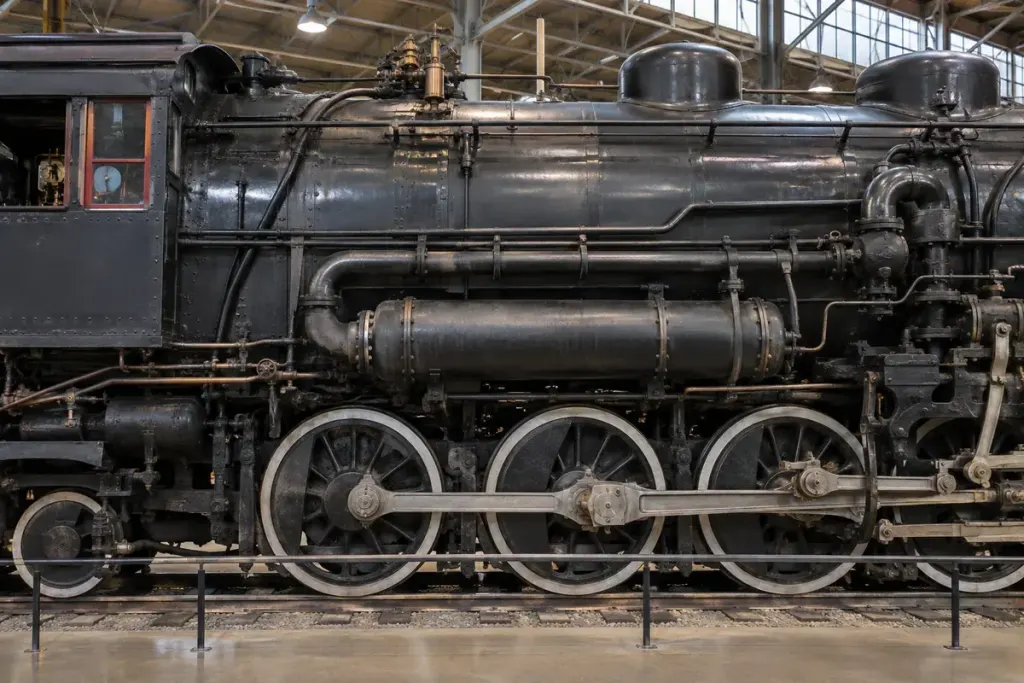
A steam locomotive’s exhaust still carried useful heat after steam had done work in the cylinders. A feedwater heater put some of that energy to another use: warming the water on its way to the boiler.
The point is easier to understand by separating two jobs. Water must be delivered into a pressurised boiler, and that water must be heated. A feedwater-heating installation concerns the second job while working with pumps and other equipment that move the water. Calling every visible pipe an injector hides those differences.
Follow the heat before following the pipe
The Alberta Pioneer Railway Association’s July–August 2002 issue of The Marker describes exhaust steam routed through a heater, transferring heat to cold feedwater. Its explanation offers a useful way into the equipment: identify the incoming water, the source of recovered heat and the route onward to the boiler.
In a simplified energy picture, warmer incoming water requires less additional heating to reach the boiler’s operating condition than the same quantity arriving colder. The size of any saving depends on the installation and operating conditions. A historical photograph cannot establish a fuel-saving percentage.
Read a preserved locomotive with three questions
First, what locomotive and date are you looking at? Equipment could change during a working life, and a later photograph may not show the original arrangement. Second, does the museum label identify the heater’s maker or type? Third, is there a drawing for that specific arrangement?
Those questions are more reliable than recognising a cylindrical object and assigning it a function from shape alone. A general explanation helps you ask better questions; a locomotive-specific drawing helps answer them.
A useful historical comparison asks what the railway gained and what extra equipment it had to maintain. Recovering heat required more than a warm pipe: the installation brought connections, controls and service work. Look for contemporary operating records before deciding whether a particular railway found that trade-off worthwhile.
The reward is a different view of the engine. The machine was not simply producing steam and throwing it away. In suitable installations, engineers found another use for part of its remaining energy before the cycle continued.