
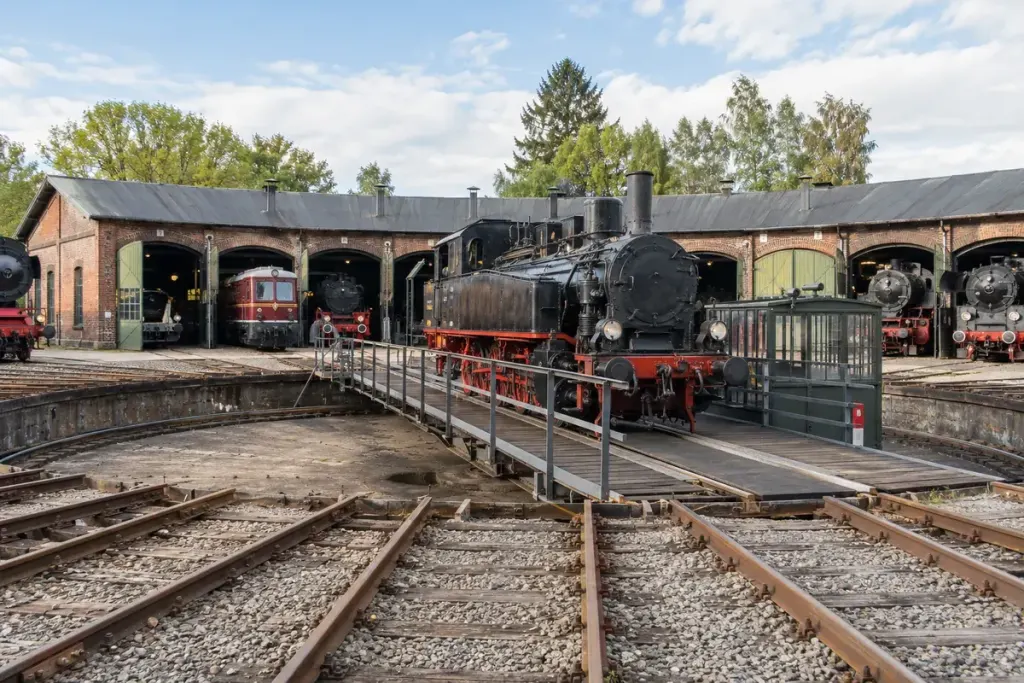
A circular pit is an arresting feature at a former railway facility. It invites an immediate story about locomotives turning in place. To understand what happened at a particular Montana site, however, the pit needs to be read alongside the turntable bridge, approach tracks and dated records.
Ask which part survives
The rotating bridge, its supports, the pit and the surrounding tracks are related components, not interchangeable evidence. A site may retain one while losing the others. A modern replacement may also occupy an older location, so appearance alone cannot establish the installation date.
Relocation is another possibility. Monticello Railway Museum’s account of its turntable documents the acquisition of a 90-foot unit built in 1928 and previously used in Peoria. That example is outside Montana, but it demonstrates why an object’s present location need not be its entire history.
Build a record around a dated question
Instead of asking only “How old is this?”, ask which locomotives and track arrangement the installation served in a particular period. Compare site plans, photographs, engineering records and captions. A larger locomotive arriving later may prompt questions about whether the table was lengthened or replaced, but those questions need documentary answers.
- Record the source and date of each plan or photograph.
- Separate measured dimensions from estimates based on an image.
- Check whether approach tracks belong to the same period.
- Note missing components and later alterations explicitly.
Observe from permitted public areas and respect barriers around pits and machinery. An abandoned appearance does not make a site safe or open for entry.
The resulting account may contain a few unresolved points. Keeping them visible produces a stronger history than attaching a confident date to a circular shape and allowing every later assumption to depend on it.