
Two railways can have the same distance between their rails and still be unable to accept the same vehicles. The missing question is not where the wheels sit, but how much space the body and its load need around the track.
Track gauge and loading gauge describe different constraints. Network Rail’s 2026 Network Statement describes freight loading gauges through vehicle-and-load height and width profiles and their compatibility with routes. It provides a modern British example of a broader railway engineering distinction.
Look beyond the rails in a historical photograph
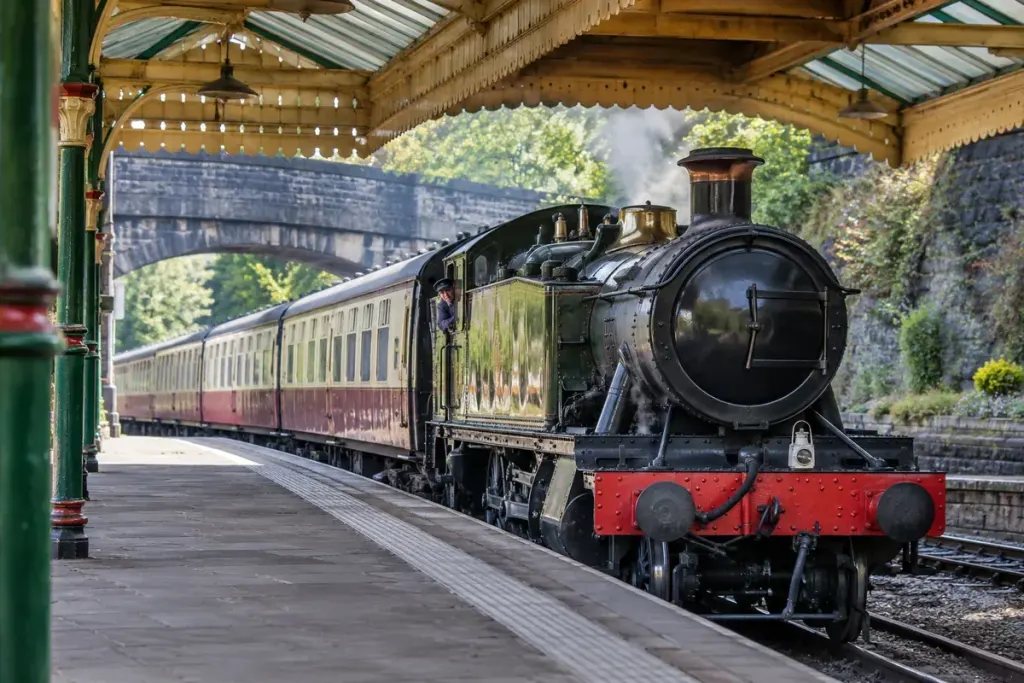
A bridge opening, platform canopy or tunnel may be as important to a vehicle’s passage as the track beneath it. Curves and the way a vehicle moves also complicate the clearance question. A photograph showing an apparently generous gap is not a technical clearance assessment.
When comparing rolling stock in a museum or archive, record the railway, date and vehicle type before looking for dimensions. A freight car’s height alone does not establish that it could operate over every route of the same track gauge.
For Montana research, this distinction suggests useful questions rather than a ready-made local conclusion. Was a particular load restricted to a route? Did a bridge or tunnel project change what could pass? Look for contemporary engineering records, clearance diagrams or operating instructions to support an answer.
A caption that leaves room for evidence
Instead of writing “this locomotive could run anywhere on standard gauge,” describe what the record actually establishes. For example: “The photograph shows this locomotive at this location on the recorded date; its wider route permissions require separate evidence.” That wording keeps an interesting image from becoming an unsupported network-wide claim.
A useful research notebook can separate wheel spacing, vehicle dimensions and route restrictions into three fields. It is a small organisational choice, but it prevents one familiar measurement from standing in for the whole railway. Matching rails is only the beginning of understanding how a train fits its surroundings.