
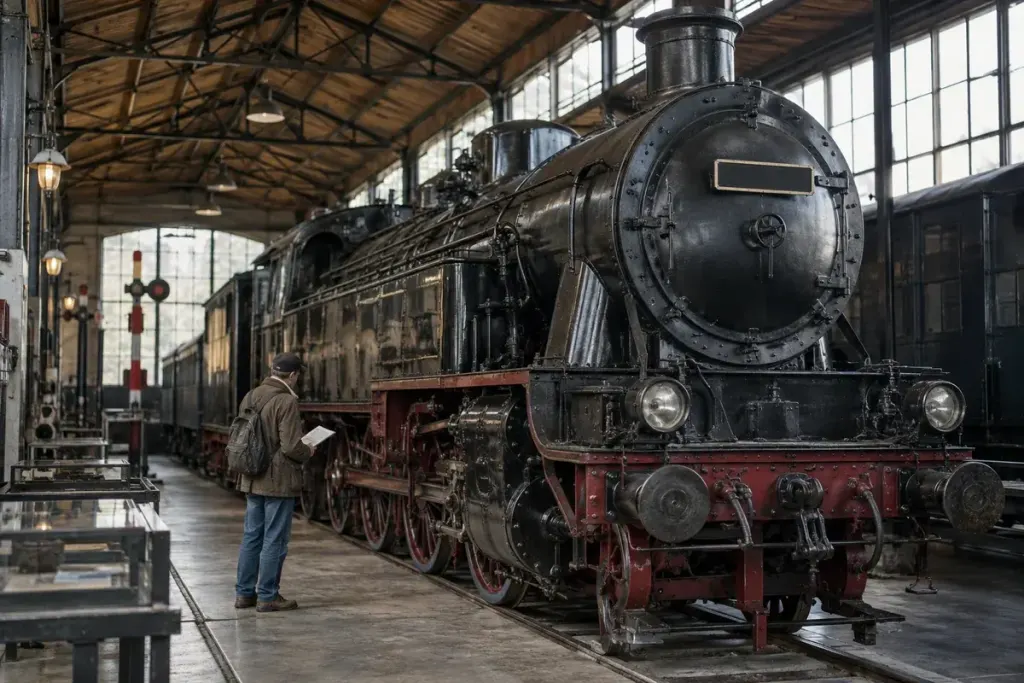
A locomotive appears in two photographs with different numbers. That does not automatically mean one caption is wrong. Railway equipment can be renumbered, sold, rebuilt or displayed under a chosen historical identity.
Build an identity chain
Start a small table with separate fields for the number visible in the image, the operator, the photograph’s estimated date and the source of each claim. Add a builder’s number only when a reliable record actually provides it. Do not substitute a fleet number because it looks more familiar.
Then look for a museum collection record, builder’s list, railway roster or archive description that connects the identities. A useful record states a sequence: built for one operator, transferred on a stated date, renumbered later. Keep uncertain dates visibly uncertain rather than smoothing them into a neat timeline.
What the photograph can and cannot settle
A readable number is evidence of what the vehicle carried when photographed, but a preserved locomotive may wear a restored livery. A modern image in old colours is not automatically a photograph from the period those colours represent.
Compare physical details cautiously: wheel arrangement, cab shape and distinctive fittings may help, while modifications can change them. A cropped image may also omit the feature needed to distinguish similar engines. Record the limitation instead of forcing a match.
For a museum visit, ask whether the displayed number is the current catalogue identity or a historical presentation. Write down the collection reference separately from the locomotive number; the two serve different purposes.
A credible caption might therefore say that an engine is “displayed as” a particular number, followed by the documented identity. That small wording choice lets the reader enjoy the restoration without confusing it with a complete service history.