
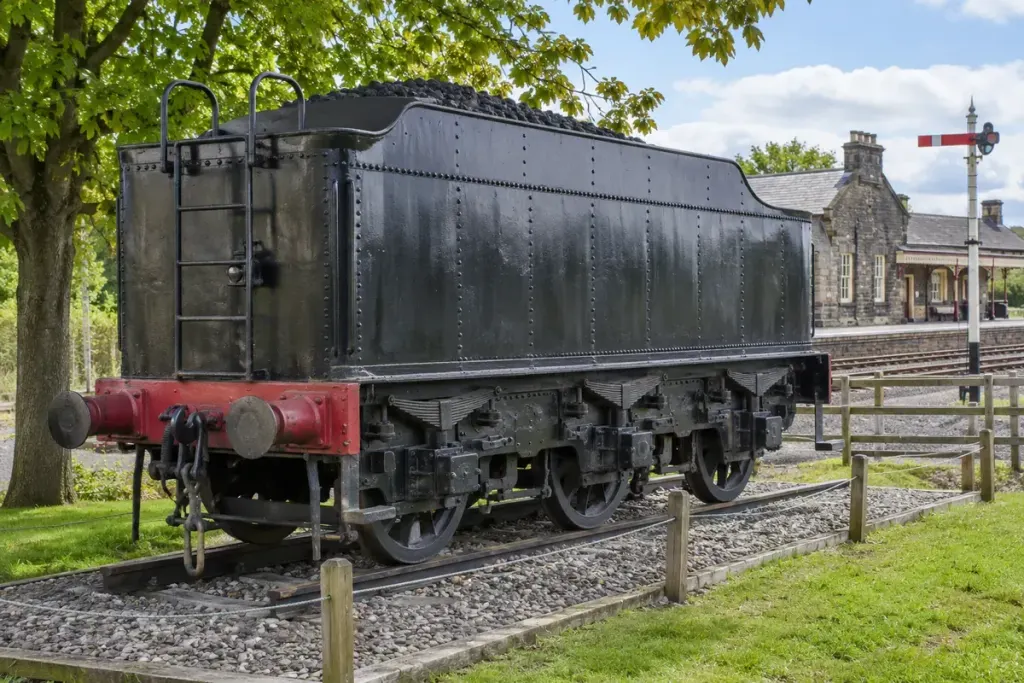
Steam locomotives needed water as well as fuel, and stopping to replenish it could interrupt a fast service. One historical answer put the water between the rails: a long trough that a suitably equipped train could use while still moving.
In American railway terminology this was a track pan; British accounts usually call it a water trough. The Didcot Railway Centre’s account of its preserved trough section describes the tender scoop being lowered over the water and raised before the trough ended. Forward motion drove water into the collection system. This was specialised infrastructure used with compatible equipment, not something every steam locomotive could do.
Read the photograph below the locomotive
When examining an archive image, look between the running rails and beneath the tender. A low trough can be less visually striking than a water tower, yet reveal a different operating method. A large splash alone is not enough to identify the arrangement; the caption and location still matter.
The equipment also raises practical historical questions. How was the trough supplied? What maintenance did it need? How did crews know where to lower and lift the scoop? Those questions turn a dramatic photograph into an investigation of railway operation.
Do not transfer one railway’s practice to another
A British example explains the mechanism, but does not establish that a particular Montana route had track pans. To make a local claim, seek a dated railroad plan, employee instruction, engineering record or clearly located photograph. Record the company, line and period alongside the evidence.
A useful research note might have three columns: what the document shows, what its caption states and what remains uncertain. Keep the device’s operation separate from a guess about its location.
Track pans are a reminder that railway speed depended on supporting systems as much as on locomotives. The infrastructure beside and between the rails helped determine how a timetable could actually be delivered.