
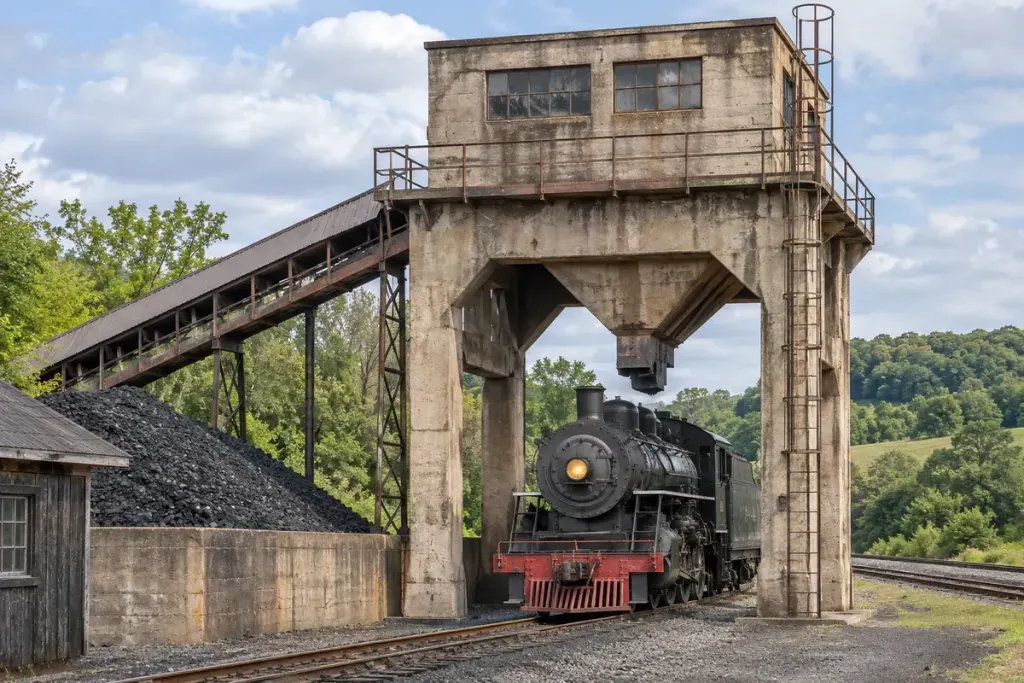
A tall concrete structure beside a railway can look disconnected from the trains that once used it. With a coaling tower, the height was part of the working system: fuel had to be raised, stored and delivered into a locomotive’s tender.
The National Park Service account of the tower at Thurmond, West Virginia, provides a specific example. Built in 1922 for the Chesapeake and Ohio Railway, it used elevators to lift coal from a receiving pit, then chutes to transfer it into tenders. Its storage capacity was 500 tons. Those details describe this installation, not every American coaling facility.
Trace the material, not just the silhouette
When studying an archive photograph, begin with the coal’s route. Where could delivery wagons unload? Which enclosure might contain lifting machinery? Where would a locomotive stand to receive fuel? Label uncertain identifications as questions until a plan, caption or operating record supports them.
An adjacent structure may belong to a different process. At Thurmond, the NPS also identifies a sand house. A photograph that includes both can therefore show more than one servicing task. Treating every nearby building as part of the coal store would flatten that useful distinction.
A comparison for Montana railway research
Use this documented example to frame questions about a Montana location, rather than to assign it the same construction date or machinery. Look for a site plan, the railway company’s engineering records and photographs from more than one period. A later image may show an altered chute or a disused installation after operating practices changed.
Write the evidence beside each observation: visible in photograph, named in caption, or confirmed in a drawing. This creates a small research trail another reader can follow. It also avoids treating a surviving tower as permission to explore it; railway ownership and access restrictions remain relevant even when the steam locomotives have long gone.